SERVICES
Stone masonry walls in the Axarquía
A stone masonry wall is a wall of natural stone laid by hand, with mortar or dry-laid, used to retain soil, build terraces or enclose a plot. In the Axarquía it is the traditional way of building “balates” (terrace walls), and it is still the option that best suits the landscape.
We build new masonry walls, rebuild collapsed balates and put up dry stone walls the way they have always been made, with more than 20 years in the trade.
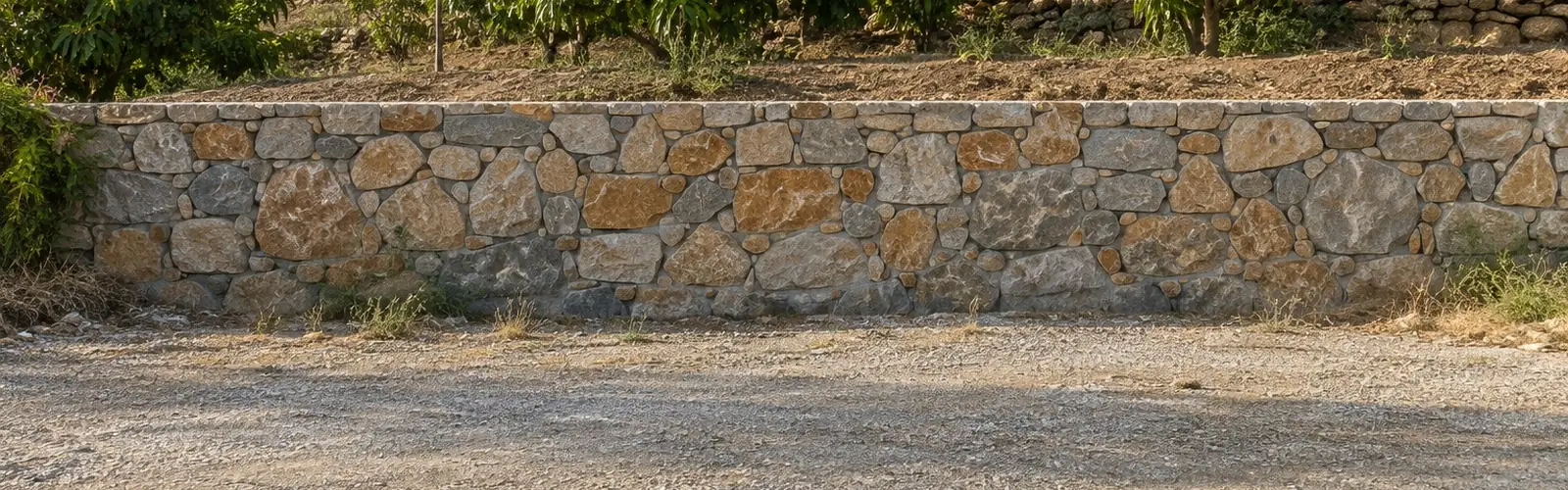
Mortared masonry, dry stone and balates
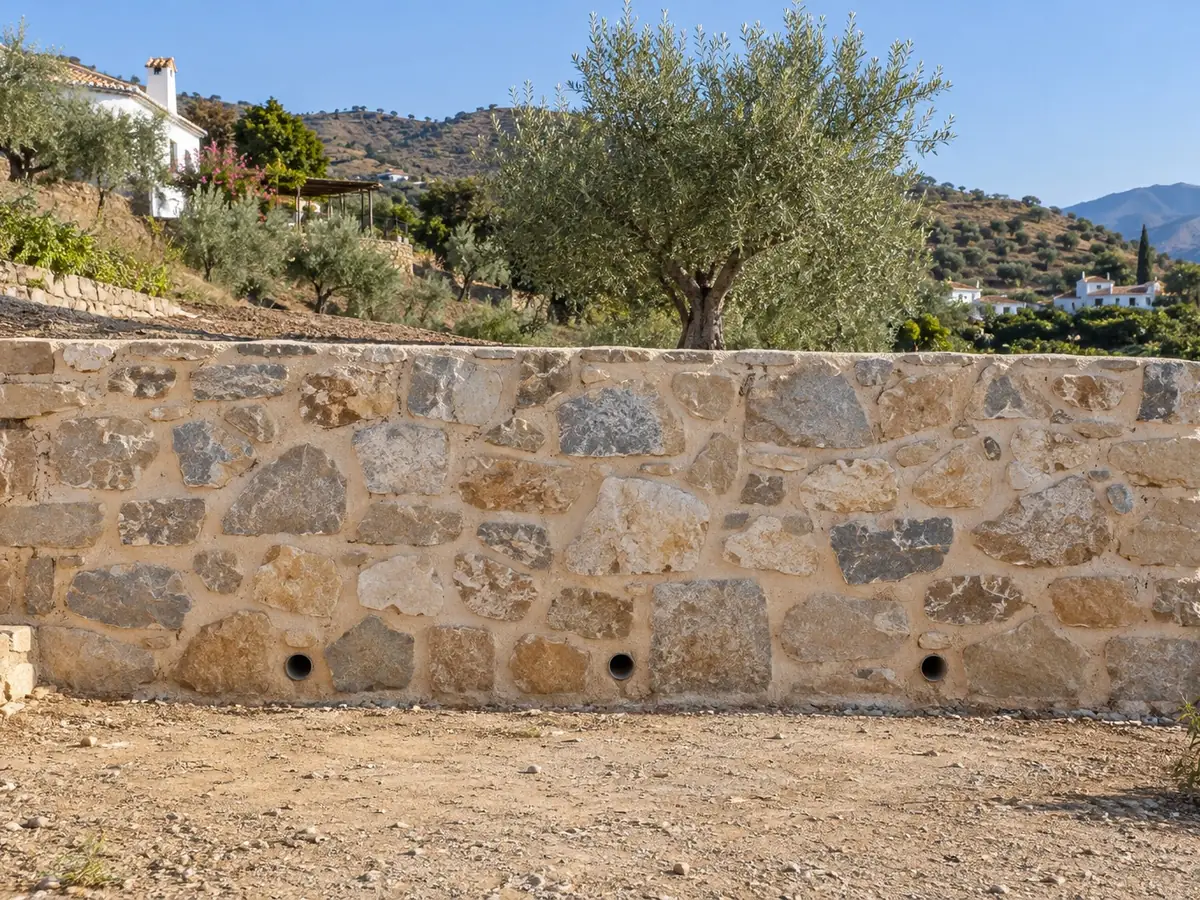
Mortared masonry
The stone is bedded in cement or lime mortar. This gives a more solid wall and allows it to be built higher. If it is retaining soil, it needs foundations, drainage behind it and weep holes to let the water out.
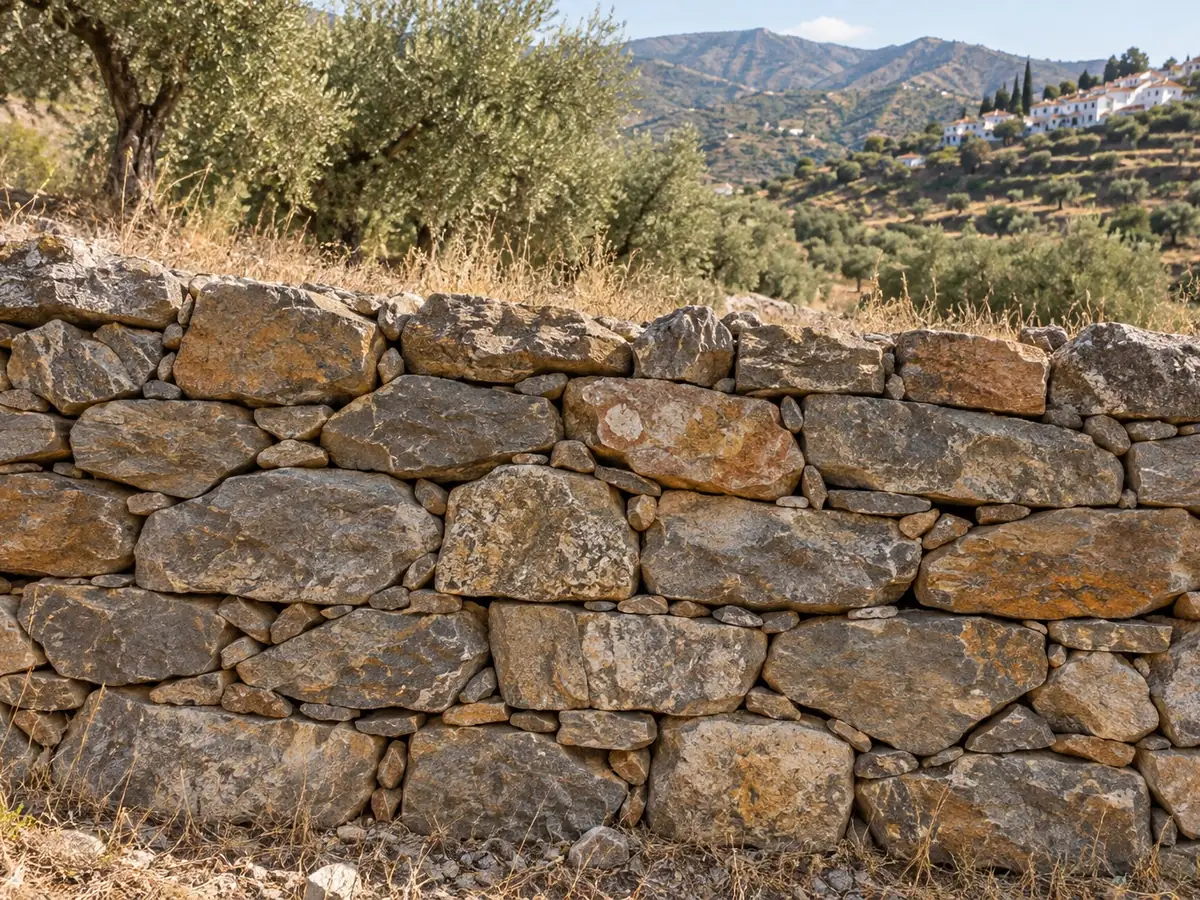
Dry stone
No mortar: each stone is fitted to the ones around it. It is an ancient technique, recognised by UNESCO as intangible cultural heritage, and it drains naturally. It takes more skill and more time, but done well it lasts for centuries.
Balates
This is what we call the stone walls that hold up the farming terraces on the hillsides of the Axarquía. Many have collapsed after heavy rain or years of neglect. We rebuild them reusing the original stone whenever possible.
Masonry or escollera: which one do you need?
| Masonry | Escollera | |
|---|---|---|
| Stone size | Stones you can handle by hand | Blocks from 50 kg to over a tonne |
| Laying | By hand, stone by stone | By machine |
| Typical height | Low and medium walls | Medium and high walls, embankments |
| Look | Finer and more traditional | More rustic and massive |
For high embankments or ground that pushes hard, an escollera rock wall is usually the sensible choice. For terraces, boundary walls and garden walls, masonry looks better. You can see all the options compared on our retaining walls page.
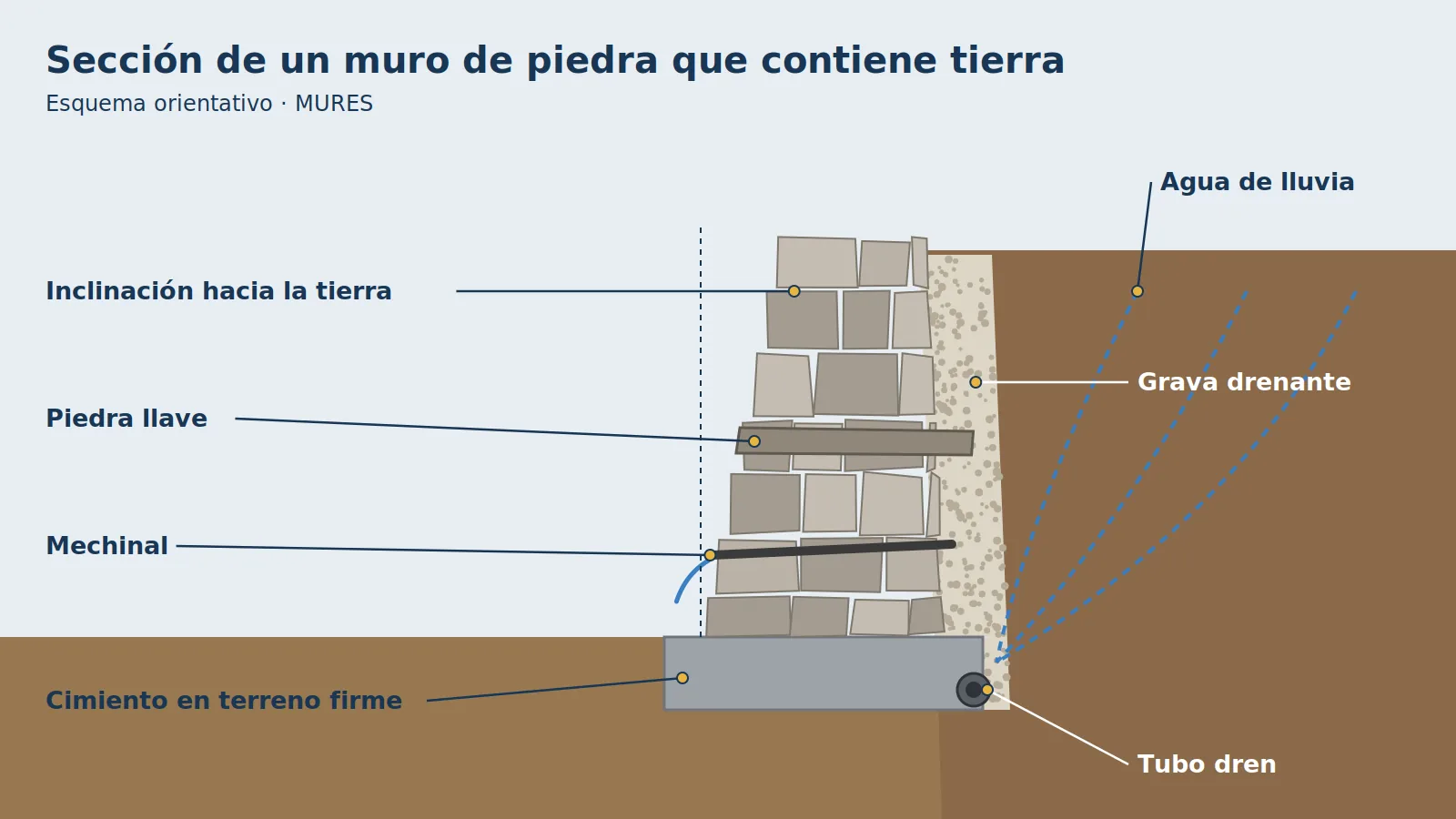
What a stone retaining wall must have
- Foundations below natural ground level, never sitting on loose soil.
- A lean into the slope (called batter), so the weight works in the wall’s favour.
- Drainage: gravel backfill and weep holes or a drain pipe. Water is what brings walls down.
- Through stones that cross the wall and tie it together.
Above a certain height, or if the wall supports a track or a house, it needs to be calculated by an engineer. We’ll tell you on the site visit.
Typical project
Illustrative example. Not a specific client.
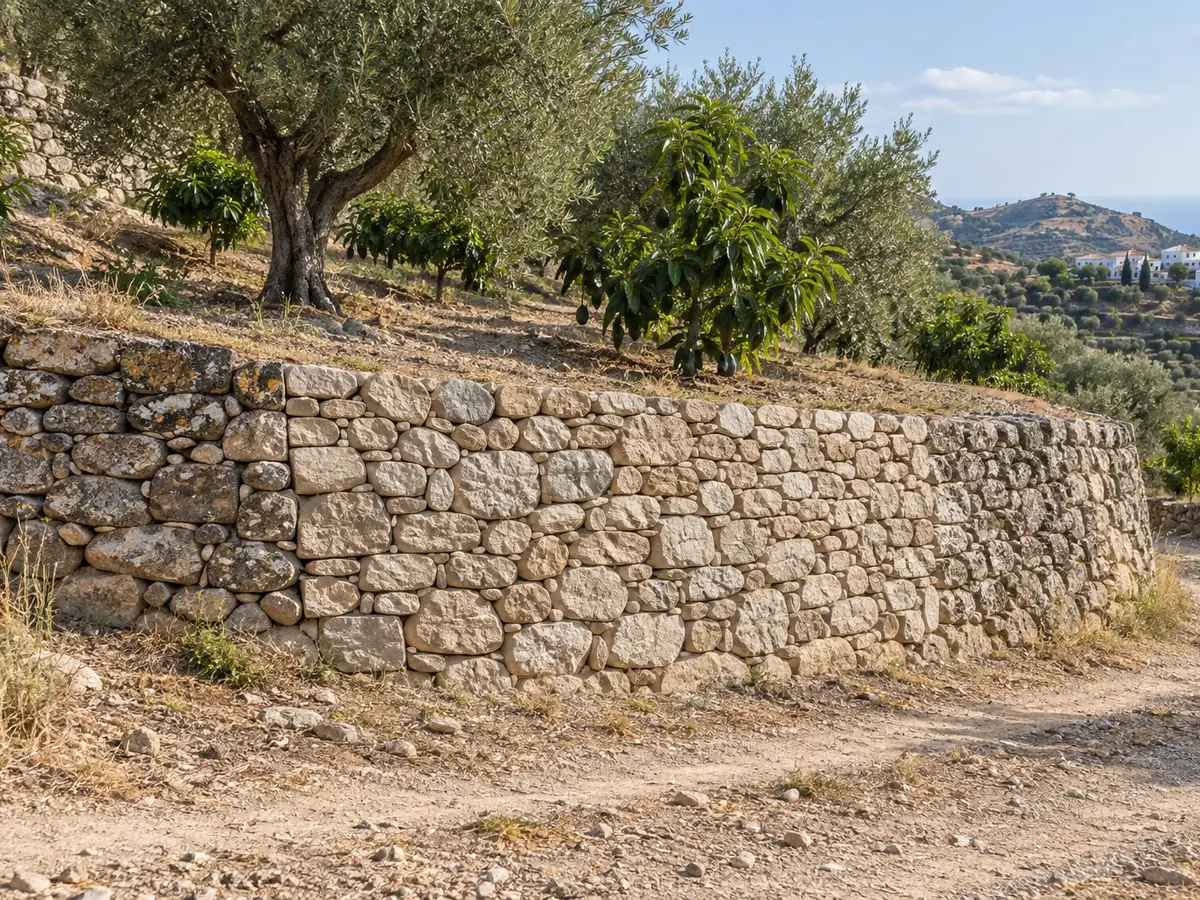
A 12-metre collapsed balate on a finca in the Axarquía
A section of dry stone wall that collapsed after heavy rain. We removed the fallen soil and stone, dug a foundation into firm ground, rebuilt it in dry stone reusing the original stone and topping up with local stone, and left drainage backfill behind it. Five days’ work for two people.
Got a collapsed balate or want a stone wall?
Send us photos of the section and a rough idea of its height and length. We’ll tell you whether it’s worth rebuilding in dry stone, with mortar or as an escollera wall, and what it would cost.
FAQs about stone masonry walls
The most common questions about stone walls.
How much does a stone masonry wall cost?
It depends on the height and thickness of the wall, whether it is mortared or dry-laid, whether the stone has to be brought in or can be reused from the plot, and site access. Dry stone, for example, takes more labour. We give you a fixed quote after seeing the site.
What is a balate?
In the Axarquía and other parts of eastern Andalusia, a balate is a stone wall that holds up a farming terrace on a hillside. They were traditionally built in dry stone, without mortar. Many have collapsed through rain or neglect, and they can be rebuilt reusing their own stone.
What is the difference between masonry and dry stone?
Mortared masonry beds the stones in cement or lime, which gives a more solid wall and allows more height. Dry stone uses no mortar at all: the stones are fitted together and the wall drains naturally. Dry stone takes more skill and time, but done well it lasts for centuries.
Is a masonry wall or an escollera wall better?
A masonry wall is better for terraces, boundary walls and low or medium garden walls, thanks to its fine, traditional finish. An escollera wall, with large blocks placed by machine, is better for high embankments and ground that pushes hard. Per square metre they cost about the same.
Why do stone walls collapse?
Stone walls almost always collapse because of water: without drainage, rain builds up behind the wall and pushes until it gives way. Other causes are foundations sitting on loose soil, too little lean into the slope, or tree roots. A well-drained, well-founded wall lasts for generations.