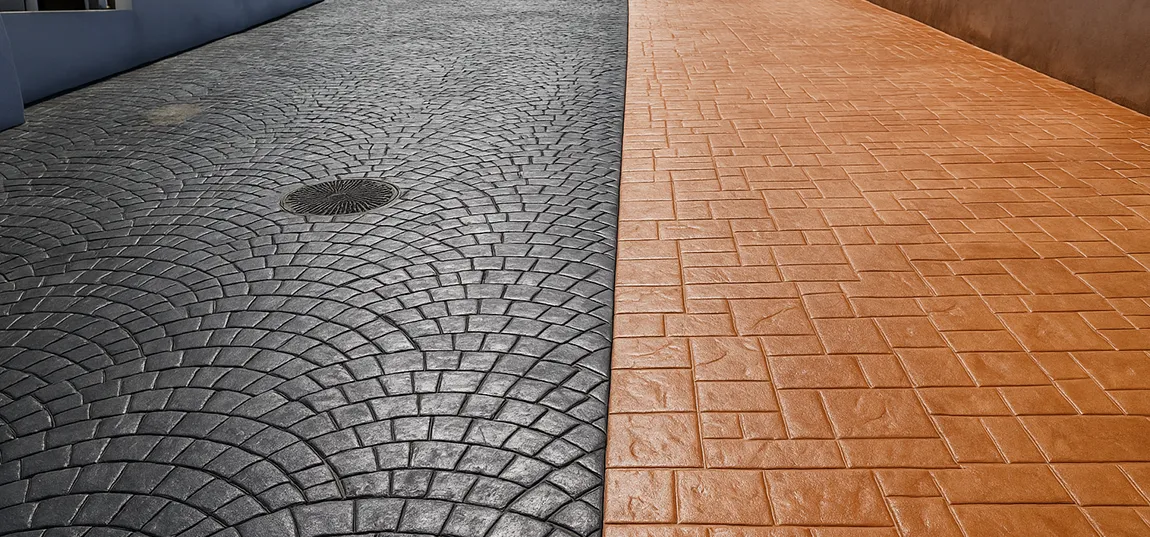
The most popular stamped concrete colours are beige, sand, cream, grey and earth tones, and each one works best in a particular spot: light colours around the pool, because they don’t get hot; mid tones on driveways, because they hide tyre marks; and dark colours in modern, shaded spaces. This guide helps you choose with good judgement, not just with the catalogue in front of you.
The most requested colours, and where each one works
| Colour | Where it works best | Advantage | Watch out for |
|---|---|---|---|
| Beige | Pools, terraces, patios | Stays cool, bright, very natural | Shows grease stains a little more |
| Sand / cream | Pools, garden paths | Even cooler underfoot | Needs regular resealing |
| Off-white | Mediterranean-style patios | Lots of light, very elegant | Dazzles in full sun and gets dirty sooner |
| Light grey | Driveways, modern homes | Understated, goes with everything | Less warm |
| Anthracite grey | Contemporary design, shaded areas | Very current, hides dirt | Gets very hot in the sun |
| Terracotta / ochre | Cortijos, country houses | Rustic, blends with the landscape | Has to match the façade |
Beige stamped concrete: the colour of the Axarquía
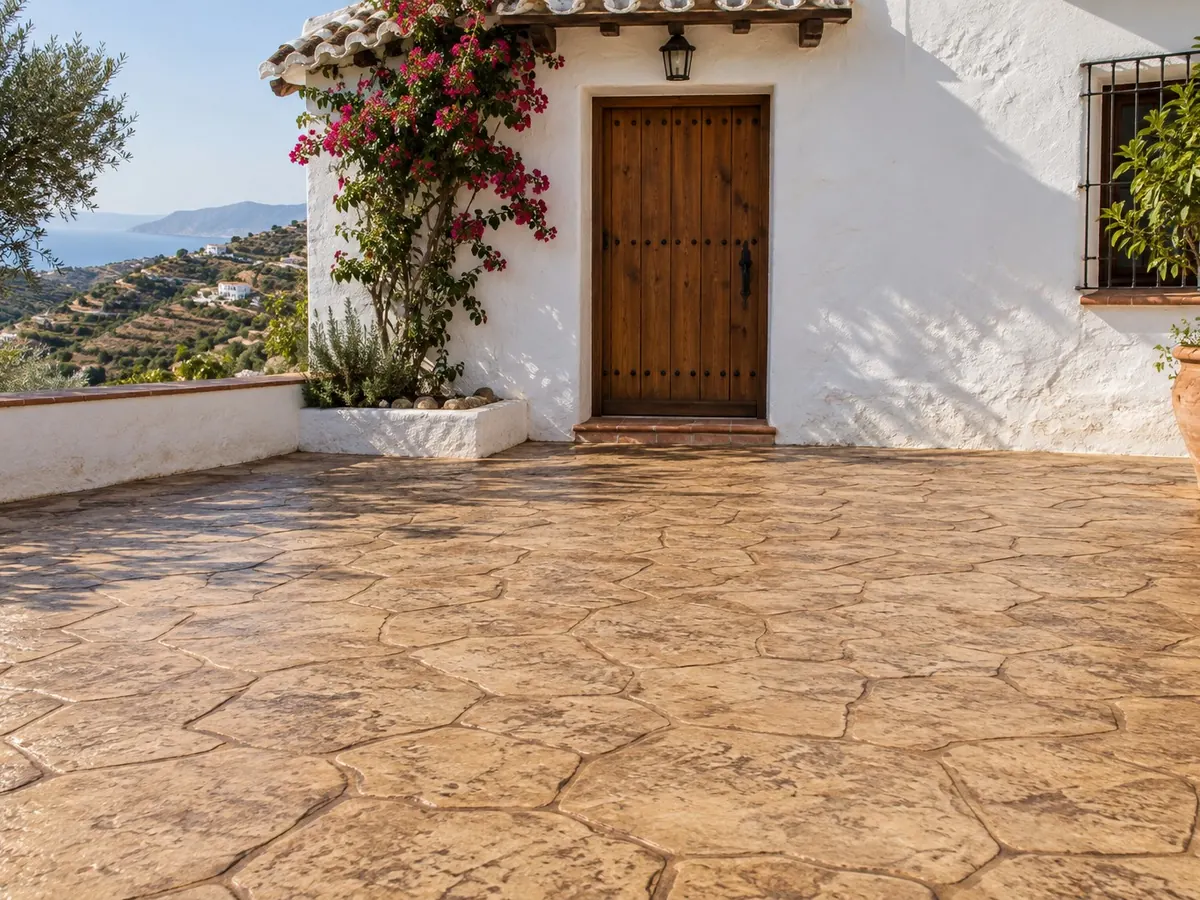
If there’s one colour you see again and again on houses around here, it’s beige, and not by chance. It goes with the whitewashed façades, with the stone of the old terrace walls and with the local light. It’s also one of the colours that heats up least, so next to a pool it’s almost the default choice.
The trick to stop it looking flat is the second colour: a brown or grey release agent that stays in the joints and in the recesses of the mould. With it, beige looks like real stone.
Which colour stays coolest in the sun
It’s the question we get asked most in summer, and the answer is simple: the lighter, the cooler. Anthracite grey in the August sun can go above 60 °C and really burn. Beige, sand or off-white stay well below that.
If the paving goes around a pool or on a terrace where people walk barefoot, choose a light colour without hesitation. We explain it in more detail in stamped concrete for pools and gardens.
How to choose the colour for your home
Look at the façade and the window frames
A white façade with wooden frames calls for warm tones: beige, sand, ochre. A grey or exposed-concrete façade calls for greys. If you have stone on the façade or on the walls, look for a colour that complements it rather than competes with it.
Think about how it will be used
On driveways, mid tones that hide tyre marks and dust. In barbecue areas, avoid very light colours. Around pools, always light colours.
Ask to see the sample in the sun
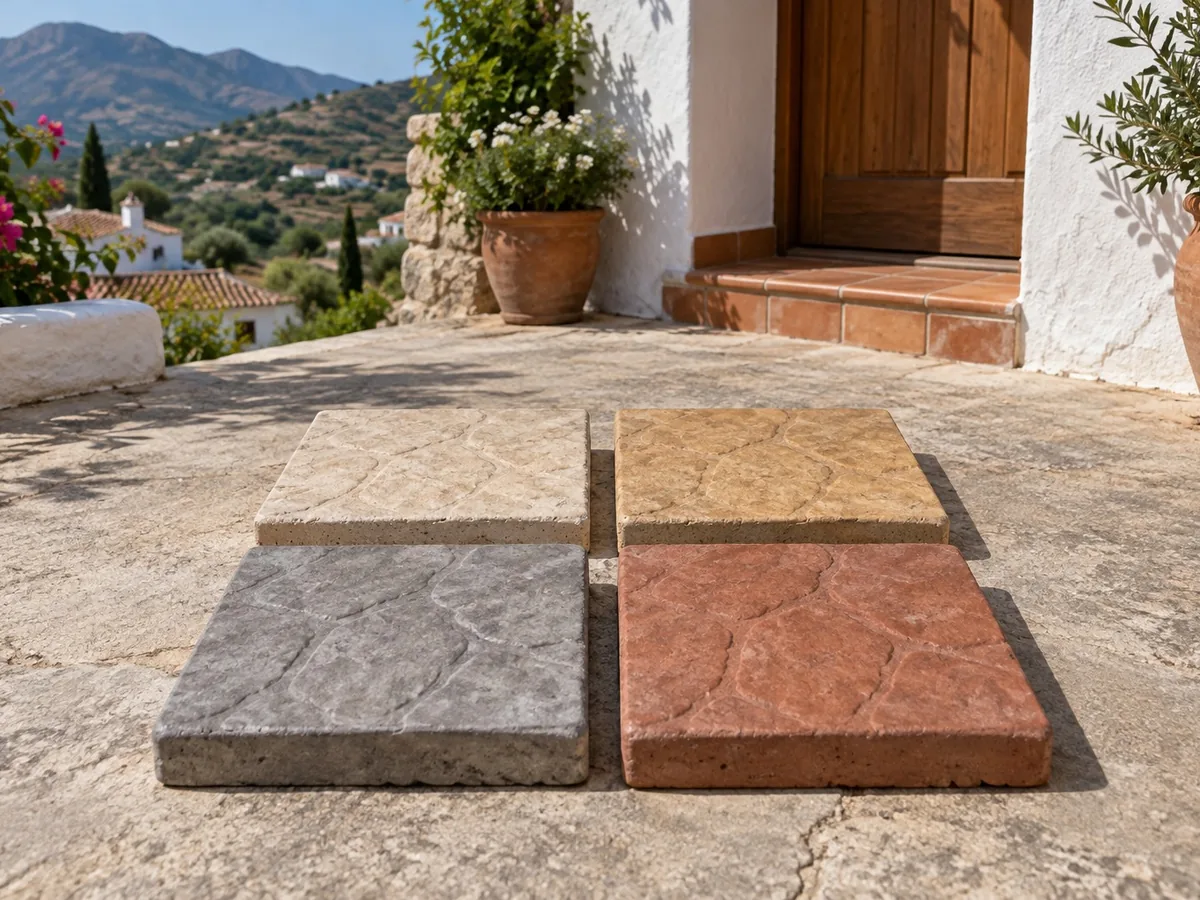
A colour in a catalogue or on a screen looks nothing like the colour on the ground at four in the afternoon. Ask to see a real sample or a finished job. If you’re in the Axarquía or Málaga, we’ll point you to one near you.
Colour and pattern combinations that work
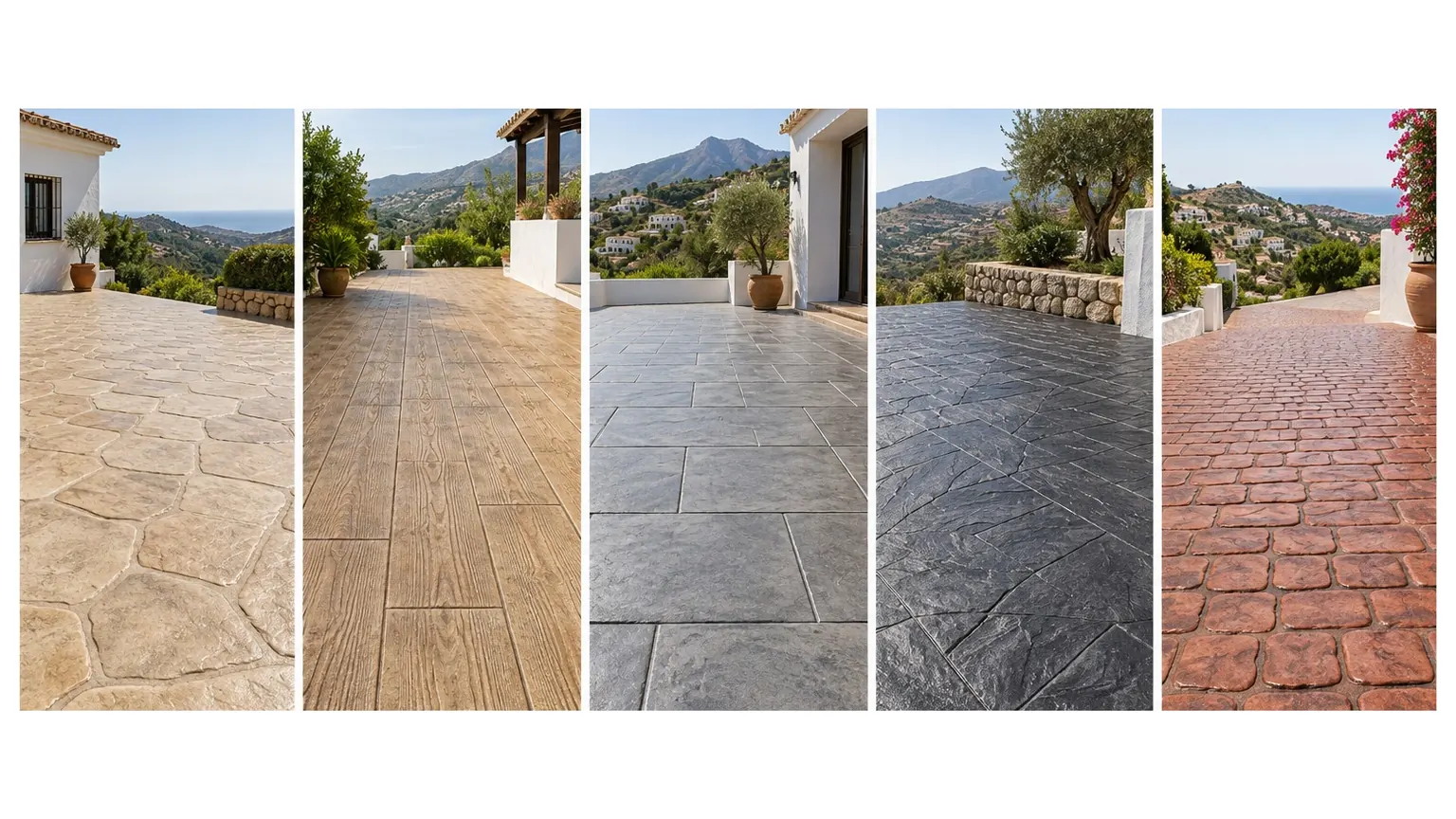
- Beige + random stone + brown release agent: the classic for cortijos and village houses.
- Sand + timber decking + grey release agent: for pool surrounds with a wood look.
- Light grey + rectangular slab: modern homes, clean lines.
- Anthracite grey + slate: very elegant in shaded areas.
- Terracotta + cobblestone: rustic-style driveways.
You’ll find photos of every pattern in our gallery of stamped concrete photos.
How stamped concrete gets its colour
Integral colour
The pigment is mixed into the concrete at the plant or in the mixer truck. The whole thickness is coloured, so if it chips the grey underneath doesn’t show. It costs more and is used less.
Dry-shake colour hardener
This is the most common method. A pigmented hardener is broadcast over the fresh concrete; it bonds with the surface and makes it more resistant to wear. Then a release agent in another colour is applied and the pattern is stamped.
Stains and pigmented resins
These are used afterwards, to brighten a faded colour, blend in a repair or add nuance. They can’t change a colour radically, but they can refresh it. We explain it in repairing stamped concrete.
How to keep the colour vibrant
The colour doesn’t disappear: it dulls when the sealer wears off. With these three habits it lasts for decades:
- Reseal every 2–3 years, and every 2 years on the coast or around a pool.
- Clean with water and neutral soap. No hydrochloric acid or other acids.
- Remove oil and rust as soon as they appear, before they soak in.
Frequently asked questions about stamped concrete colours
What colours of stamped concrete are there?
Stamped concrete comes in dozens of colours, but the most popular are beige, sand, cream, off-white, light grey, anthracite grey, terracotta and ochre. On top of the base colour, a second release-agent colour is applied that stays in the joints and adds depth. By combining the two you can achieve almost any stone or wood tone.
Which stamped concrete colour stays coolest?
Light stamped concrete colours such as beige, sand, cream or off-white heat up least in the sun. Dark grey or anthracite can go above 60 °C in midsummer. That’s why we always recommend light tones for pool surrounds and terraces where people walk barefoot.
What does beige stamped concrete look like?
Beige stamped concrete gives a warm, bright look that goes very well with white façades and local stone. It’s the most requested colour for pools and terraces because it doesn’t get hot and hides dust. With a brown or grey release agent in the joints it gains depth and looks like natural stone.
Does stamped concrete lose its colour over time?
Stamped concrete doesn’t lose its colour, because the colour is in the mix or in the hardened surface layer, but it dulls if the sealer wears off. Resealing every 2–3 years keeps the colour vibrant for decades. On the coast and in very sunny areas it’s best to reseal at the shorter interval.
Can stamped concrete be painted?
Stamped concrete can be painted with specific floor paints, but it isn’t recommended: paint covers the texture, wears away in high-traffic areas and has to be redone. To refresh or slightly change the tone it’s better to use stains or pigmented resins, which soak into the pores and preserve the texture.
How do I choose the stamped concrete colour for my home?
To choose your stamped concrete colour, look at three things: the colour of the façade and window frames, how the area will be used and how much sun it gets. Around pools, light tones. On driveways, mid tones that hide tyre marks. And ask to see a real sample in the sun, because the catalogue can be misleading.
Not sure about the colour? Send us a photo of your façade and the area to be paved and we’ll suggest two or three combinations. Request a free, no-obligation quote.