STAMPED CONCRETE
Stamped concrete for pools and gardens
Stamped concrete works for a pool surround as long as it has a non-slip finish and a light colour, so it grips when wet and doesn’t burn bare feet. In the garden it’s used for paths, barbecue areas and lawn edging, with no joints for weeds to grow in.
We explain which finish to choose, how it meets the pool edge and the soil, and the mistakes we see repeated every summer.
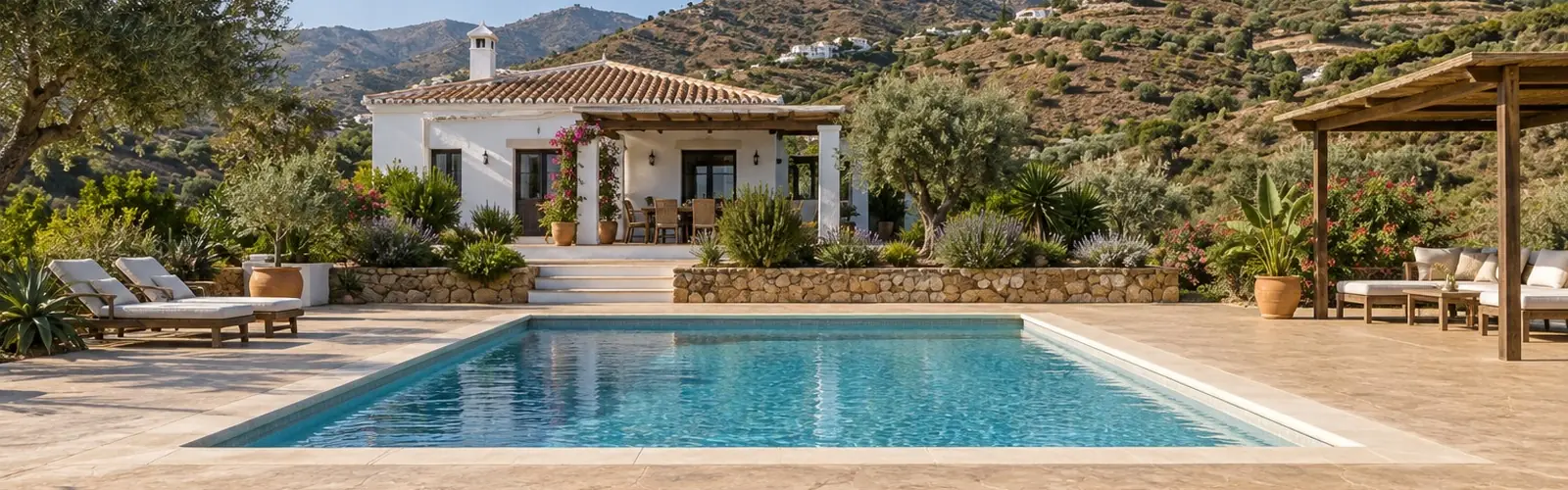
Around the pool: three non-negotiables
Non-slip
The texture of the pattern helps, but it isn’t enough. On pool surrounds we add anti-slip aggregate to the sealer. It loses a little shine, but the kids can run around without giving you a heart attack.
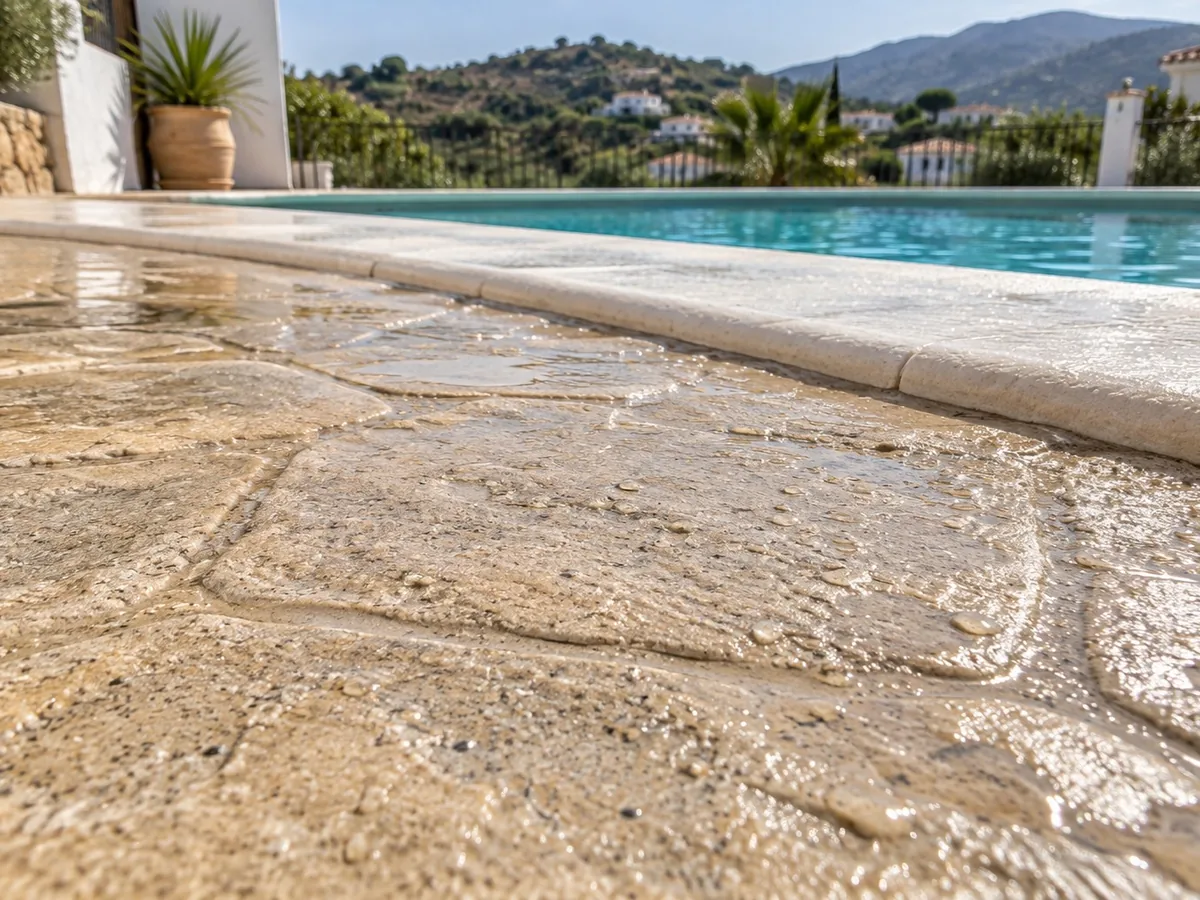
Not too hot
Dark grey in the August sun in the Axarquía can go above 60 °C. Beige, sand or off-white stay well below that. That’s why almost all the pool surrounds we lay are in light tones.
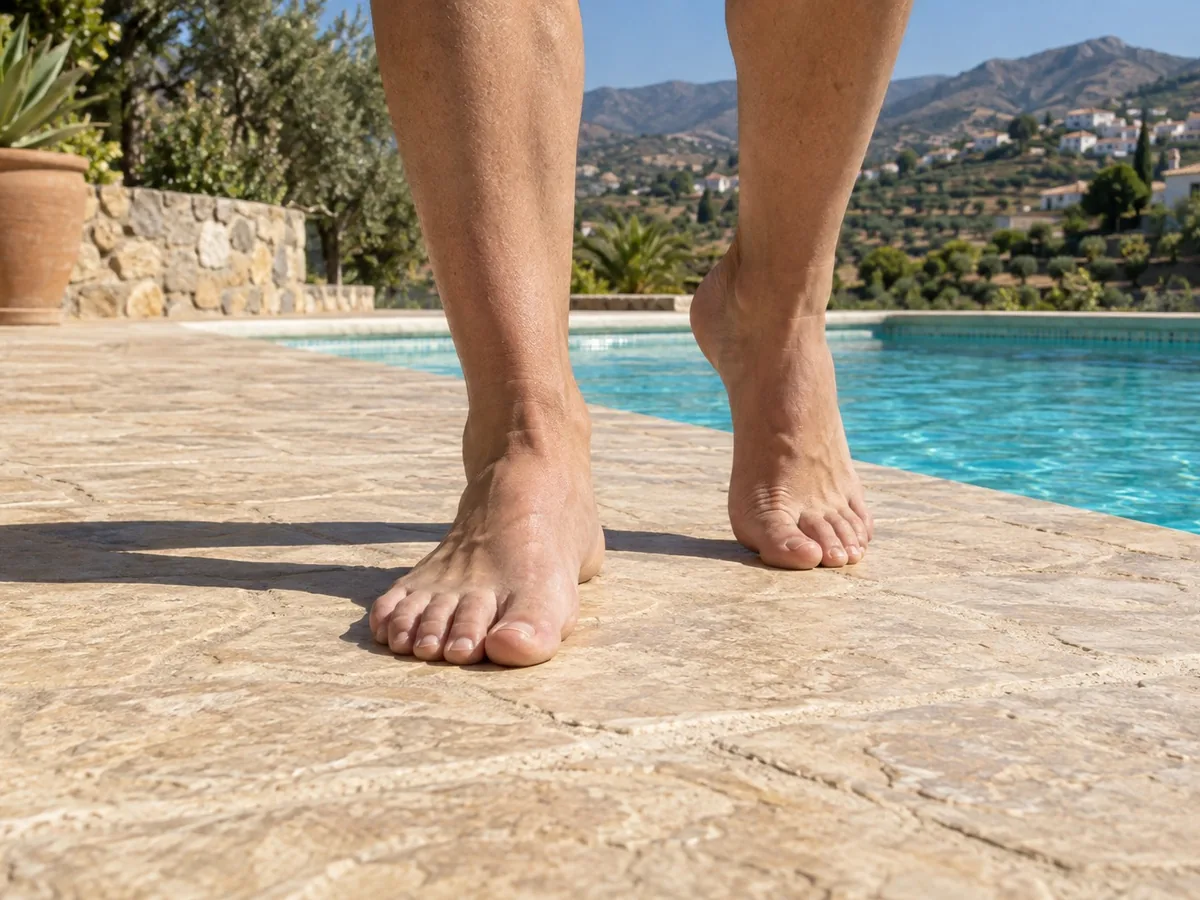
Water drains away
The paving is laid with a 1.5–2 % fall away from the pool, or towards a drainage channel. That way chlorinated water doesn’t run back into the pool or pool along the coping.
Finishing at the coping
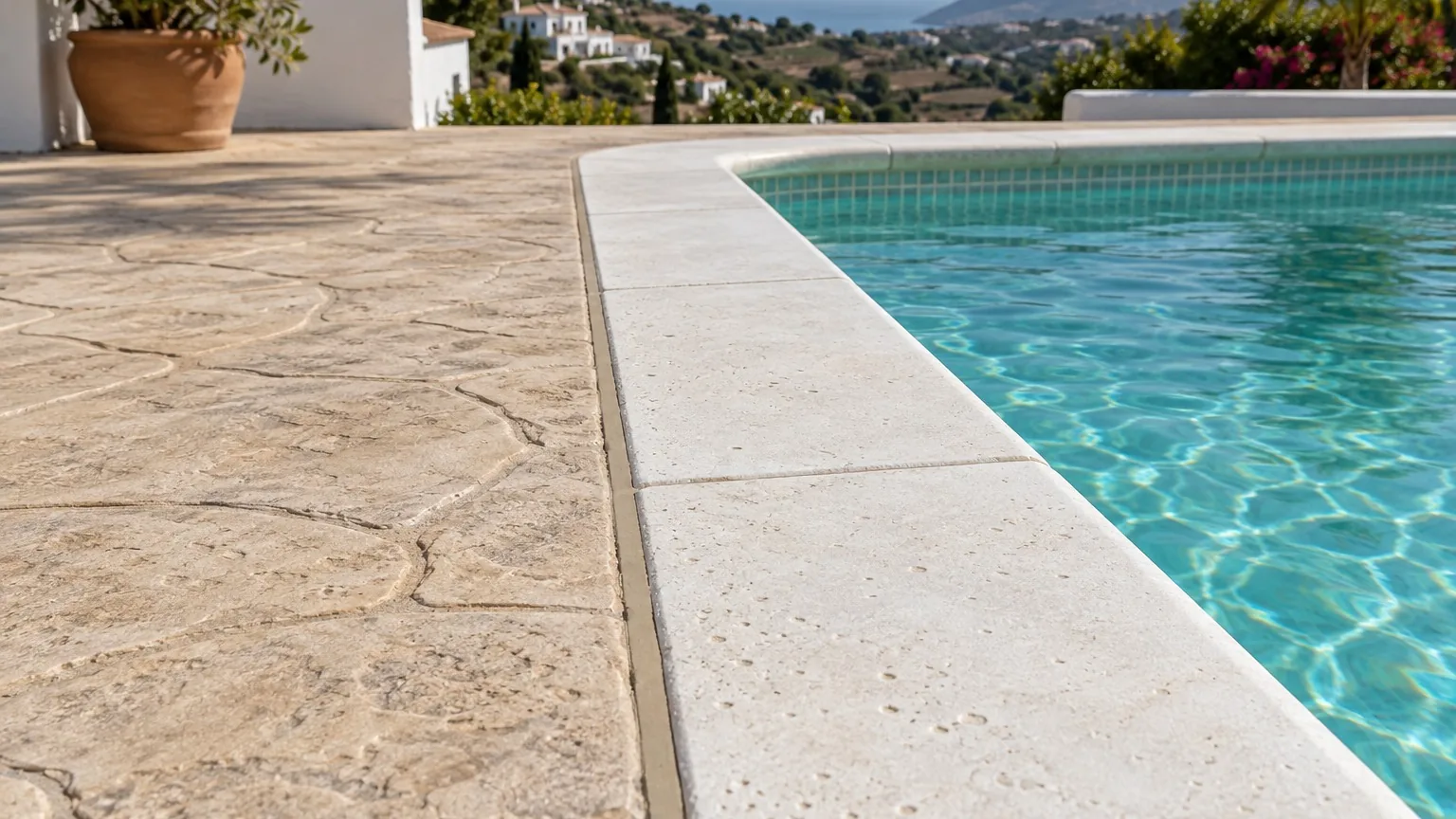
The junction between the paving and the pool edge is where you can tell if a job has been done well. There are two ways to do it:
- With coping stones (reconstituted or natural stone): the stamped concrete meets them with a thin, sealed expansion joint. This is the most common option and the easiest to maintain.
- With the concrete itself forming a bullnose edge: it looks very seamless, but it needs careful formwork and can’t be rushed.
There must always be a joint between the paving and the pool shell. Concrete moves with heat, and if it has nowhere to go, it pushes the coping.
Is it affected by chlorine or salt water?
The concrete itself isn’t. What suffers is the sealer, which wears faster with chlorine, salt and sun than on a driveway. For pools we recommend resealing every 2 years, and rinsing with fresh water from time to time if it’s a saltwater pool.
In the garden
Paths and walkways
A stamped concrete path 1–1.2 m wide, with a random flagstone or wood pattern, looks natural through the lawn and doesn’t fill with weeds like loose slabs. It’s laid 10 cm thick with a hidden edging so the lawn doesn’t eat into the edge.
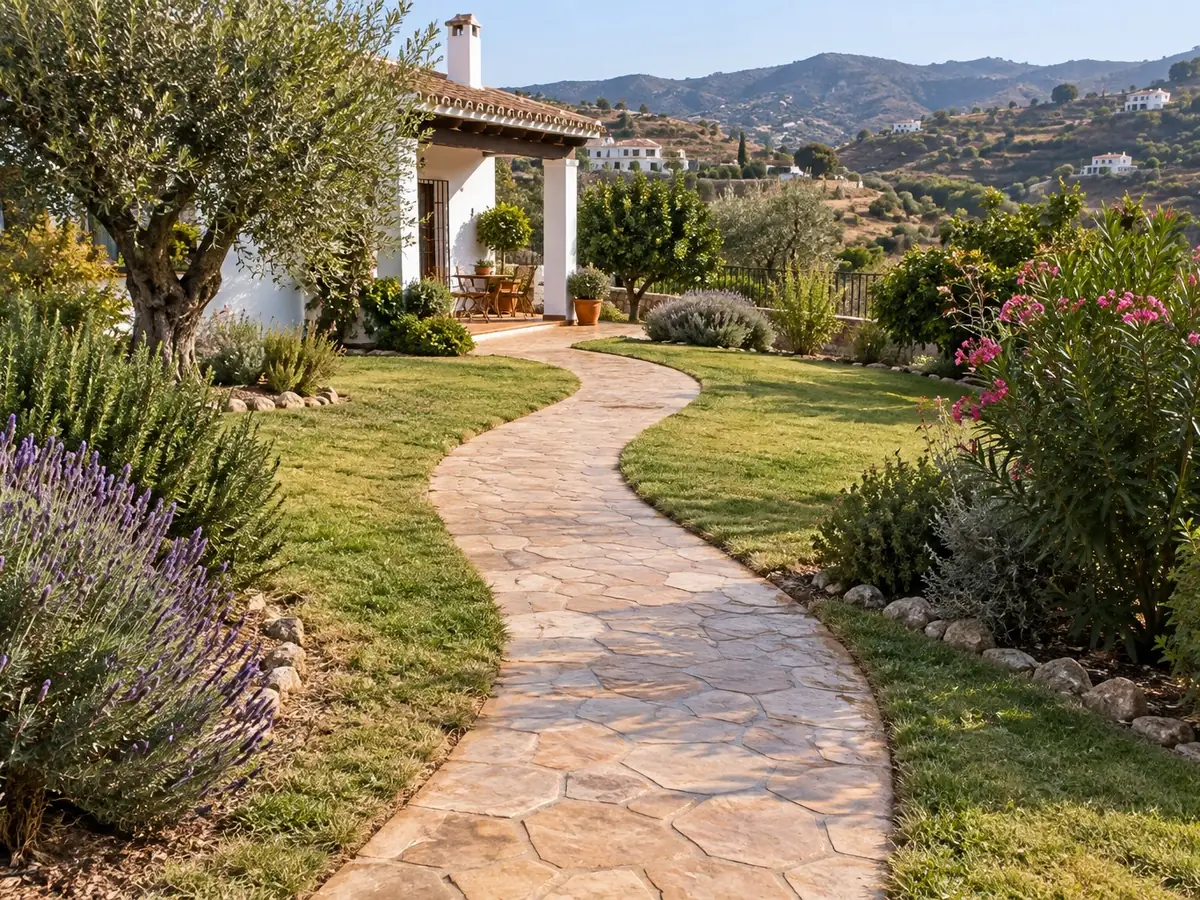
Barbecue and outdoor dining areas
This is where it gets dirtiest: grease, wine, charcoal. A mid-tone colour and a good sealer mean it cleans with soap and water. Avoid very light colours here – the opposite of the pool.
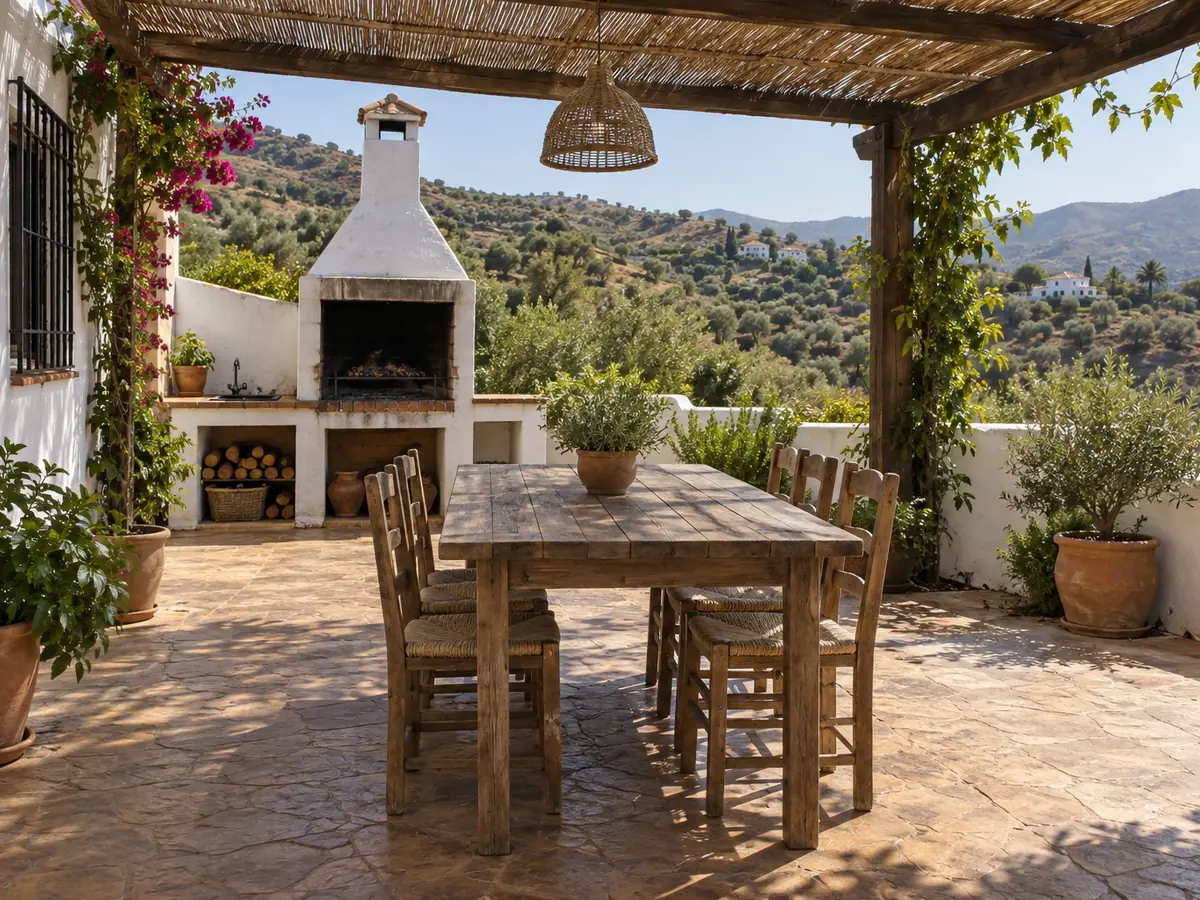
Lawn edges and flower beds
A 30–40 cm strip of stamped concrete around the house or the lawn stops sprinklers wetting the façade and saves you strimming right up against the wall.
Colours and patterns that work best outdoors
For pools: beige, sand, cream or off-white, with a stone, slate or light wood pattern. For paths and barbecue areas: earth tones, ochre or mid-grey.
To see the full range, there’s a photo guide in stamped concrete colours (in Spanish), and what affects the price on stamped concrete price per m².
Building or renovating your pool?
If the pool is new, ideally we come in once the shell and coping are finished. If it’s a renovation, we check whether your existing slab can be used. Either way, we give you a price after the visit.
FAQs: stamped concrete for pools and gardens
What we’re asked most before paving a pool area.
Is stamped concrete suitable for a pool surround?
Stamped concrete is suitable for a pool surround if it has a non-slip finish, a light colour and a 1.5–2 % fall away from the pool. It meets the coping stones with a sealed expansion joint. It’s one of the most widely used solutions for pools in the Axarquía and on the Costa Tropical.
Is stamped concrete slippery when wet?
Wet stamped concrete isn’t very slippery thanks to the pattern texture, but on pool surrounds it’s best to add anti-slip aggregate to the sealer. With that treatment it grips well even barefoot. Very smooth or high-gloss finishes aren’t recommended near water.
Does stamped concrete get too hot to walk on barefoot in summer?
Dark-coloured stamped concrete can exceed 60 °C in full summer sun, and then it does burn. In light tones such as beige, sand or off-white the temperature is much lower. That’s why we always recommend light colours for pool surrounds.
Does chlorine affect stamped concrete?
Chlorine and salt don’t damage stamped concrete, but they wear out the sealer that protects the colour sooner. Around pools it’s best to reseal every 2 years instead of every 3, and with saltwater pools, to rinse with fresh water from time to time.
What is the best finish around a pool?
Around a pool, light-coloured stamped concrete works best, with a stone, slate or light wood pattern and a sealer with anti-slip aggregate. Avoid dark colours, which heat up, and smooth or high-gloss finishes, which are slippery when wet.
Can you lay a stamped concrete path through a lawn?
Yes, a stamped concrete path through a lawn is laid 10 cm thick, 1–1.2 m wide, with a hidden edging that stops the grass creeping over the edge. With a random flagstone or wood pattern it looks natural and, unlike loose slabs, no weeds grow between the pieces.