MAINTENANCE AND REPAIR
Stamped concrete repair: cracks, colour and resealing
Most stamped concrete problems can be fixed without lifting it: faded colour comes back with cleaning and resealing, fine cracks are sealed and flaking areas are repaired with coloured mortar. Only when the base has sunk is it worth relaying the affected bay.
We explain how to tell each case apart, what you can do yourself and when to call someone in.
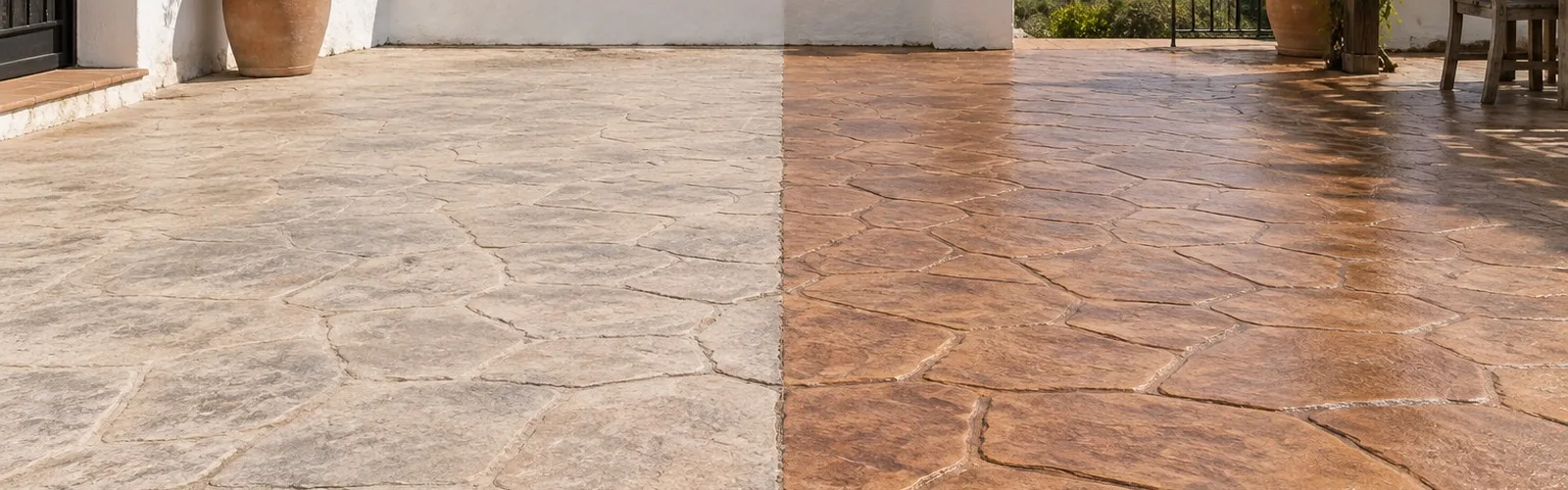
First, the diagnosis
Before talking about price we need to know what’s wrong with the floor. These are the five problems we see on almost every visit:
| Symptom | Usual cause | Solution |
|---|---|---|
| Dull colour, whitish look | Worn-out or poor-quality sealer | Cleaning and resealing |
| Oil, rust or mould stains | Sealer worn out, the surface absorbs | Specific cleaning and resealing |
| Fine cracks | Joints cut late or bays too large | Crack sealing with filler or resin |
| Colour layer peeling | Water on the surface when stamping, or frost | Repair with coloured mortar |
| Wide cracks or sinking | Poorly compacted base or no mesh | Break out and relay the bay |
Resealing: the most needed and least done job
How often
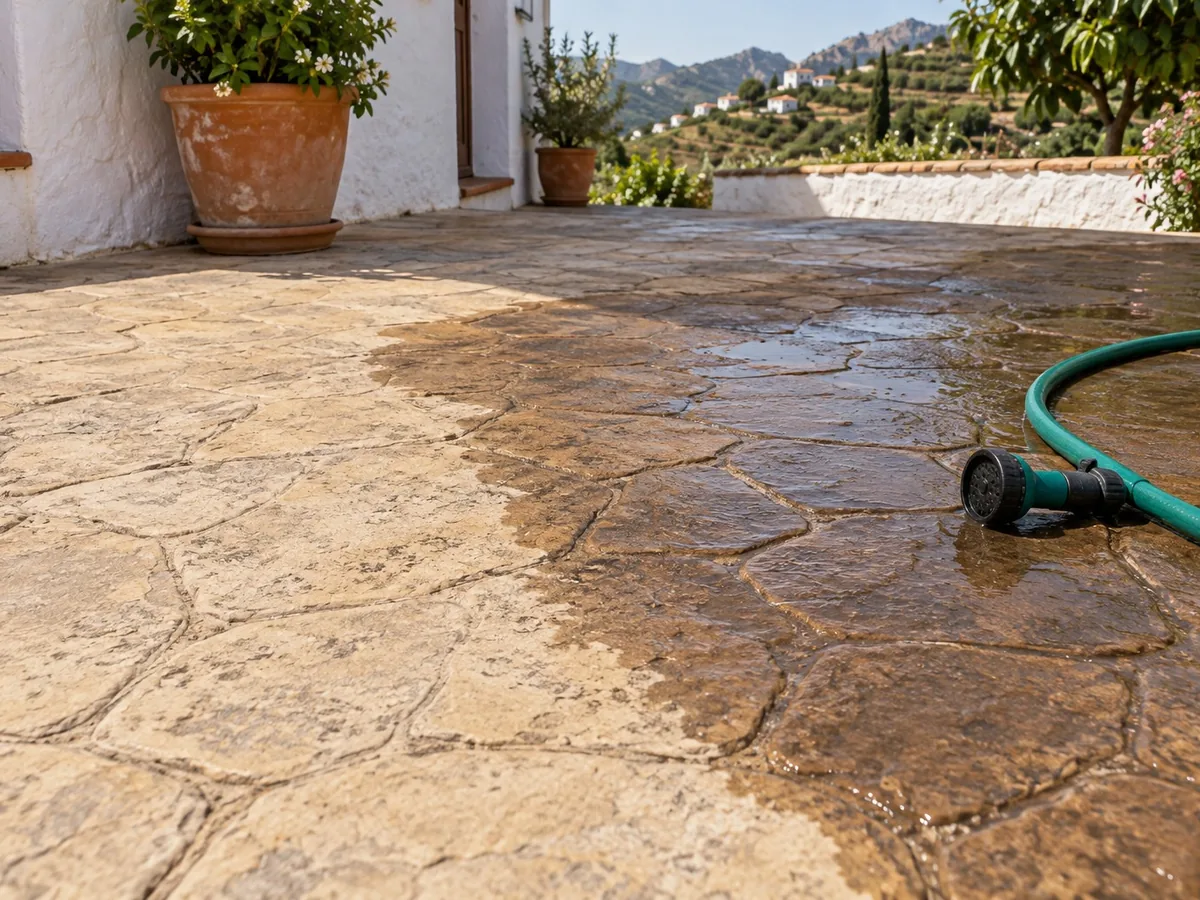
Every 2–3 years – at the shorter end near the coast, around pools or on very sunny driveways. The clear sign is when the floor changes colour a lot when wet: water is getting into the surface.
How it's done
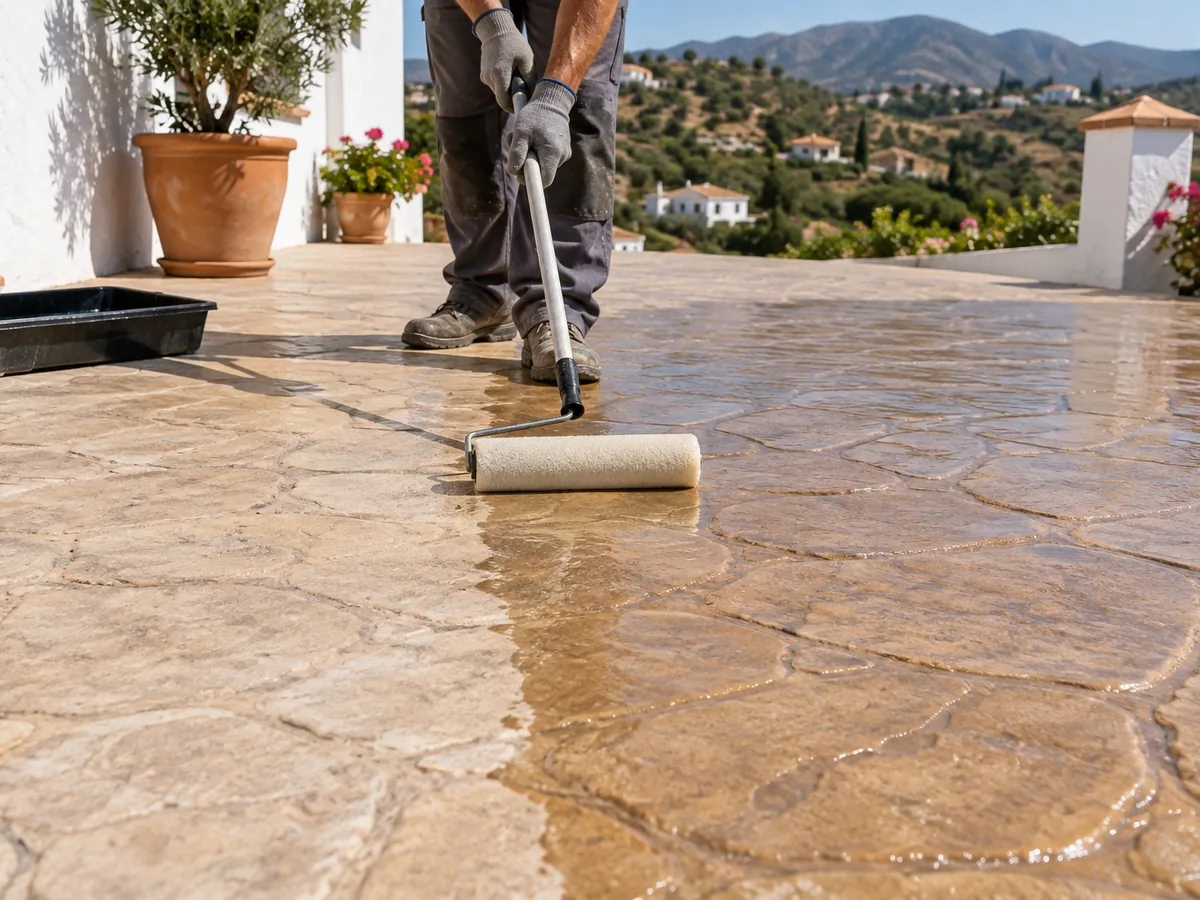
Pressure washing, a day to dry, then one or two coats of sealer by roller or spray. You can walk on it after a few hours and drive on it the next day. On a normal driveway it’s a one-day job.
Cracks
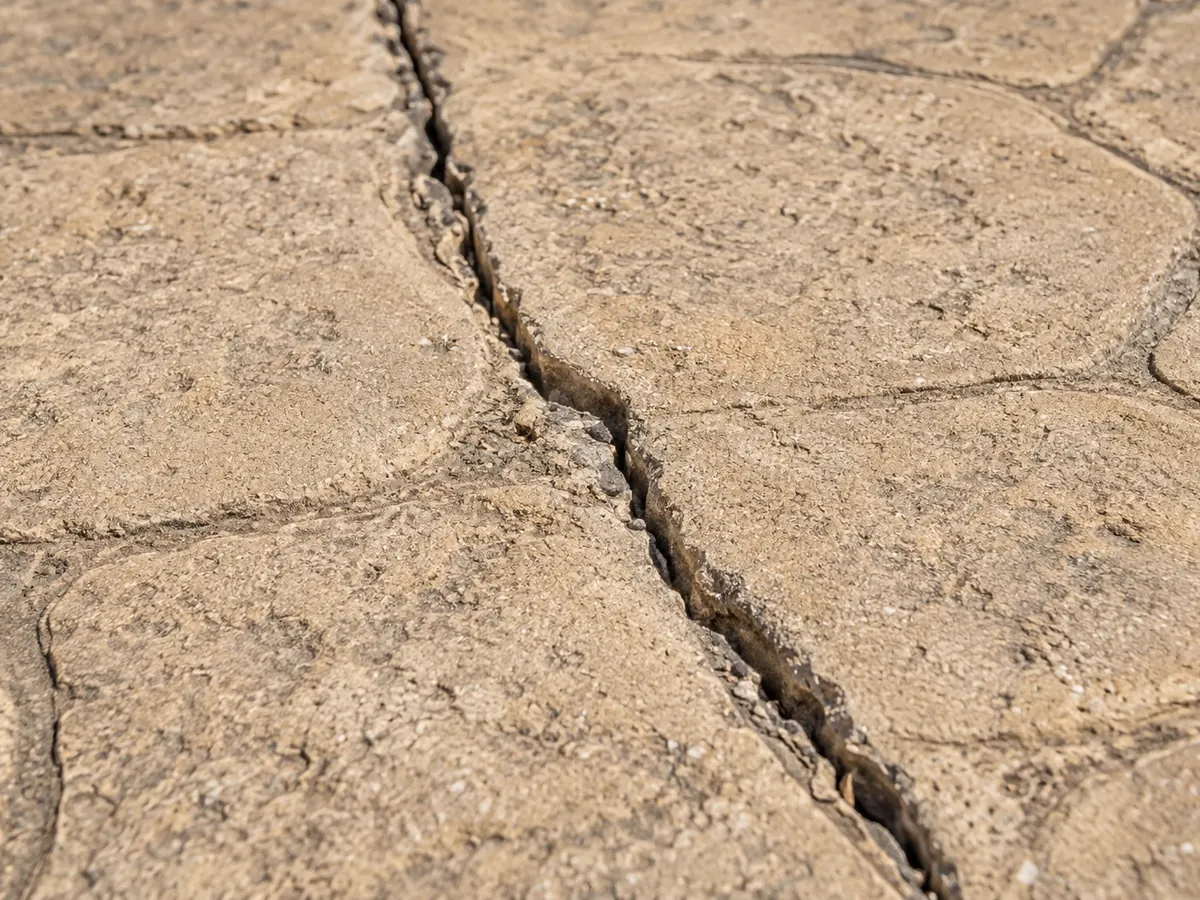
Not all cracks are the same, and there’s no need to panic at the first one that appears.
Hairline cracks under 1 mm
These are shrinkage cracks and almost always cosmetic. They’re sealed with filler or resin in the colour of the paving and disappear from view. They don’t affect strength.
Cracks that widen or have a step
If the crack is growing, or one side is higher than the other, the problem is underneath: the base has moved. No patch will fix that. The affected bay is cut out joint to joint, the base is rebuilt and it’s poured and stamped again.
Stains: how to remove them
- Car oil: alkaline degreaser, a brush and hot water. If it’s old, a shadow may remain.
- Rust from furniture or pots: a specific rust cleaner for concrete. Never hydrochloric acid, which eats the colour.
- Mould and algae: pressure washing and an anti-moss product. It usually appears in shady areas where the sealer has worn off.
- Barbecue grease: degreaser and patience.
After any heavy cleaning you need to reseal, because the sealer will have suffered.
Can you change the colour of old stamped concrete?
Yes, within limits. With stains or pigmented sealers you can darken or refresh a colour, or blend in repaired areas. What you can’t do is go from dark grey to off-white without it showing: the base colour rules. For big colour changes the honest solution is to relay.
Repair price
The price of resealing or repairing depends on the area, the condition of the surface and the type of damage: sealing a few cracks is not the same as relaying loose bays. If the whole surface has to be lifted and relaid, it’s quoted as a new job: you can see what affects the price on our stamped concrete price per m² page.
Send us a photo of your floor
With two or three photos, one close up and one from further away, we can almost always tell you whether it needs resealing, a repair or relaying. No obligation.
Stamped concrete repair FAQs
What people who already have stamped concrete at home ask us most.
Can stamped concrete be repaired without lifting it?
Most stamped concrete problems can be repaired without lifting it. Faded colour comes back with cleaning and resealing, fine cracks are sealed with coloured filler or resin and flaking areas are redone with pigmented mortar. The affected bay only needs lifting when the base has sunk or the crack has a step.
How often should stamped concrete be sealed?
Stamped concrete should be resealed every 2–3 years. Near the coast, around pools or on very sunny driveways, every 2 years is best. The sign it’s due is when the floor changes colour a lot when wet, because water is getting into the surface. Resealing is usually a one-day job.
What happens if stamped concrete is never resealed?
If it’s never resealed, stamped concrete won’t break, but it loses its colour, becomes porous and absorbs oil, rust and mould stains that are then hard to remove. Over the years the colour layer wears away in high-traffic areas. A floor neglected for many years may need deep cleaning and staining before sealing.
How do you clean stamped concrete?
Stamped concrete is cleaned with water, a neutral soap and a brush, or with a moderate pressure washer. For oil use an alkaline degreaser and for rust a specific concrete cleaner. Avoid hydrochloric acid and strong acids, which eat away the colour and the sealer.
Why is the colour layer on my stamped concrete peeling?
The colour layer on stamped concrete peels mainly when it was stamped with water on the surface, when water was added to make floating easier, or because of frost in the first few days. A worn-out sealer also plays a part. It’s repaired by cleaning the area and applying coloured mortar, then resealing.
Will the patch show after repairing stamped concrete?
A patch on stamped concrete shows a little at first, because new and old colour don’t age the same. It’s greatly reduced by repairing joint to joint, using the same mould and resealing the whole surface afterwards, not just the repaired area. Over the months the difference softens.
How much does it cost to repair cracked stamped concrete?
It depends on the damage. If it’s a case of sealing cracks or relaying loose bays, it’s quoted for the affected area. If the base has sunk across the whole surface, it’s better to relay it and it’s quoted as a new job. We come and look and tell you what makes sense.