SERVICES
Polished concrete in the Axarquía and the Costa Tropical
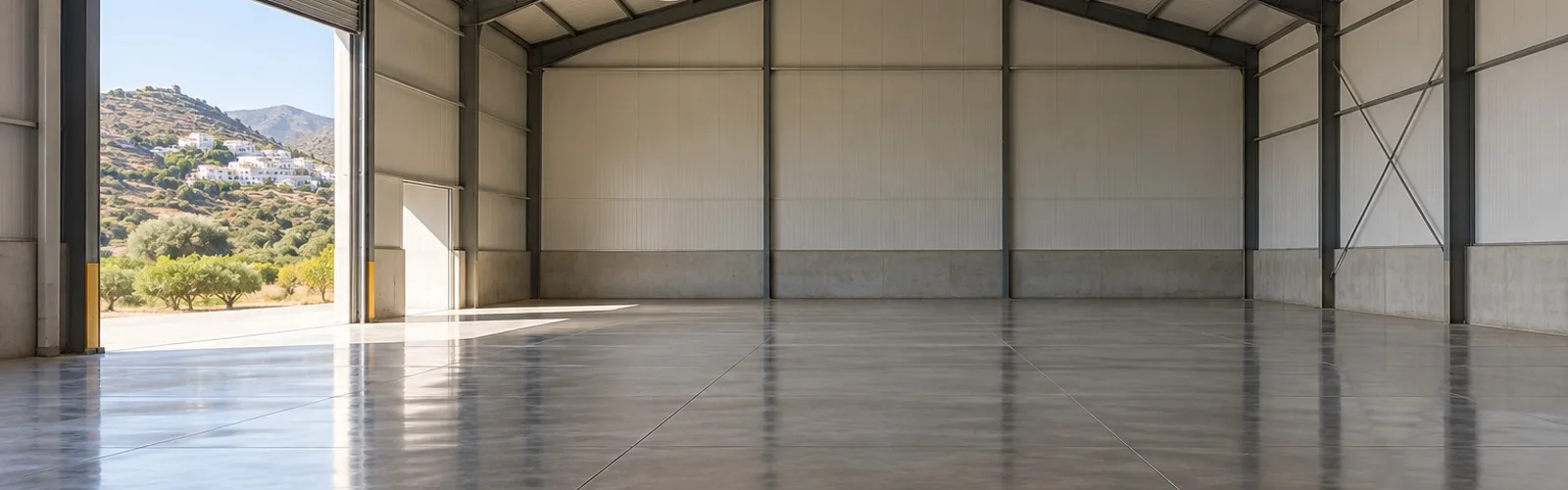
Polished concrete is a seamless concrete floor with a smooth, closed finish, achieved either by power-floating the fresh concrete with a quartz hardener or by grinding it with diamond discs once it has cured. No tile joints, no grouting and extremely hard-wearing.
We lay it in garages, warehouses, storerooms, shops and homes in Vélez-Málaga, Nerja, Torrox, the rest of the Axarquía and the Costa Tropical (Almuñécar, Salobreña and Motril). Here we explain how it’s done, where it makes sense, where it doesn’t, and what affects the price.
What polished concrete is – and what it isn't
People use the term “polished concrete” for different things, and it’s worth clearing up before asking for a quote, because the difference in cost is significant.
There are two ways to get a smooth concrete floor. Both are good, but they are not for the same job:
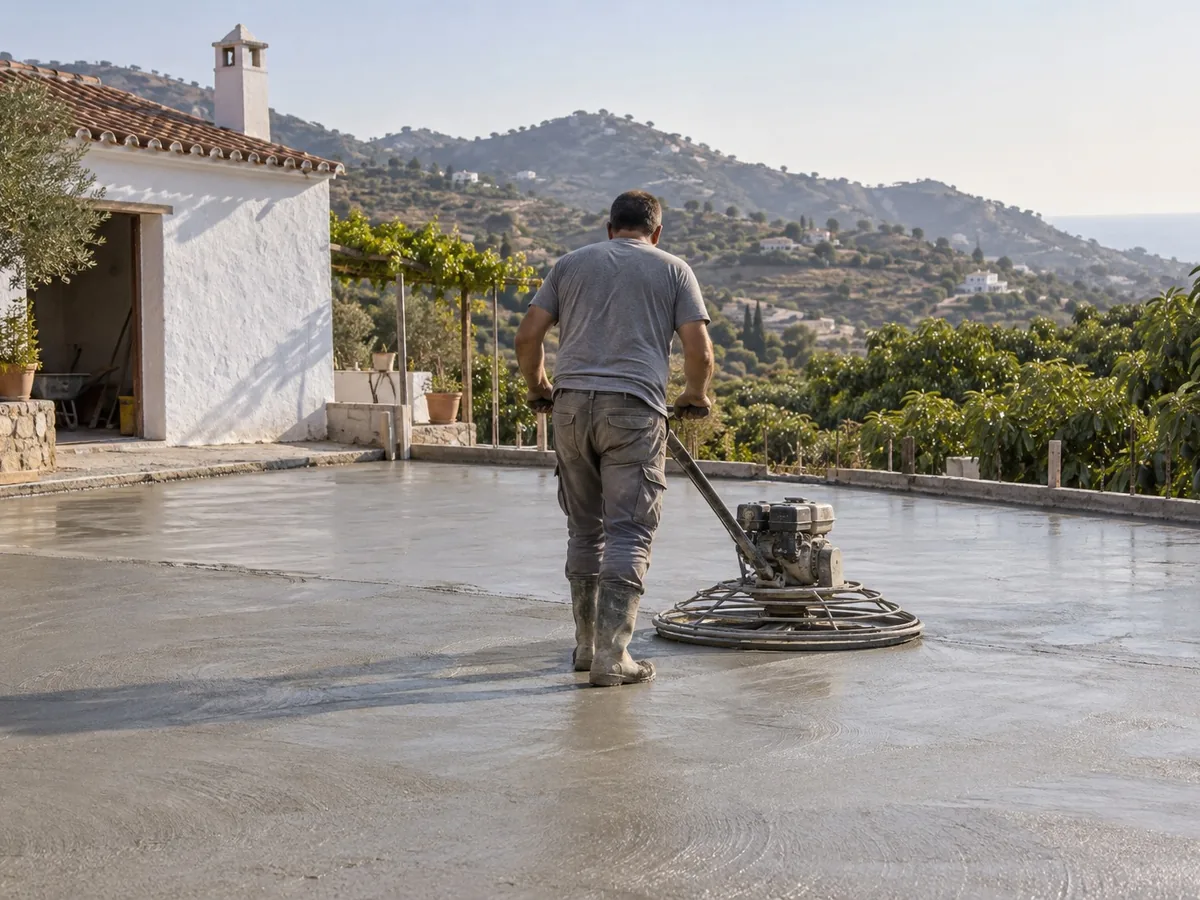
Power-floated fresh concrete
The slab is poured and, while the concrete is still green, a quartz hardener is spread over it and a power trowel (the “helicopter”) is run across until the surface is closed. The result is a smooth, satin floor that is very resistant to wear.
It is the most common option for garages, warehouses and storerooms, and the most economical one if the slab is new.
Diamond-ground cured concrete
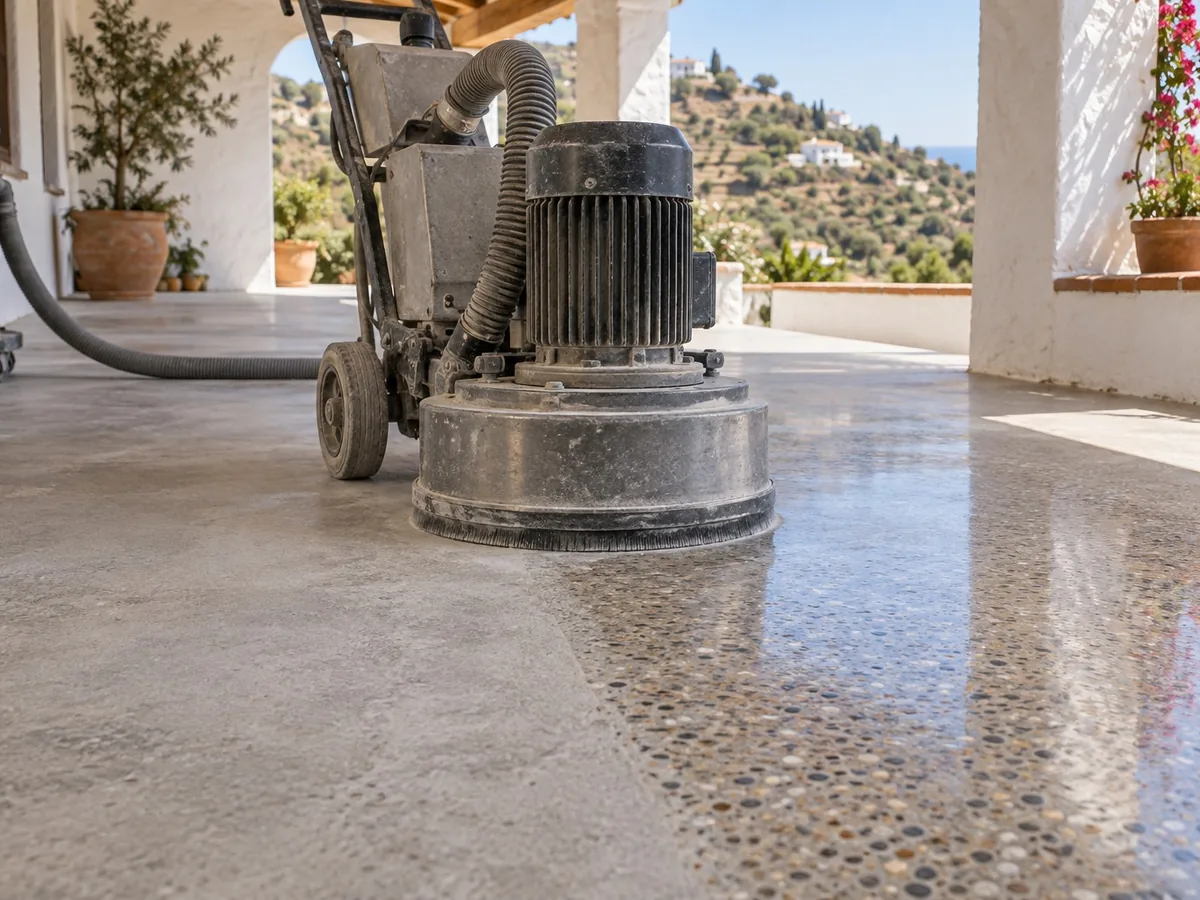
Here we work on a slab that has already hardened, new or old. It is ground and polished with progressively finer diamond discs, densified with lithium silicate and burnished.
The result is a much finer finish, with a sheen and exposed aggregate if you want it. It’s what you see in shops and industrial-style homes.
What polished concrete is not: a microcement layer, an epoxy resin or floor paint. Those are different finishes, with a different thickness, price and lifespan.
How we do it, step by step
- Site visit and measuring. We look at the ground or the existing slab, access for the concrete lorry and how the floor will be used.
- Base. For a new slab, we compact a 15–20 cm sub-base of hardcore. Without a good base, any floor ends up cracking.
- Pouring. HA-25 concrete slab with welded mesh and fibres. 10–12 cm for indoor foot traffic and 15 cm where cars or machinery will drive.
- Finish. Power-floating with quartz while fresh, or diamond grinding once the concrete has cured, usually after 3 or 4 weeks.
- Joints. We saw-cut control joints within the first 24–48 hours, in bays no more than 4 or 5 metres a side. They stop cracks appearing wherever they like.
- Densifying and sealing. Lithium silicate to harden the surface and reduce dust, plus a sealer if the use calls for it.
You can walk on it after 48–72 hours and drive on it after 7 days. The concrete reaches full strength at 28 days.
Where polished concrete makes sense – and where it doesn't
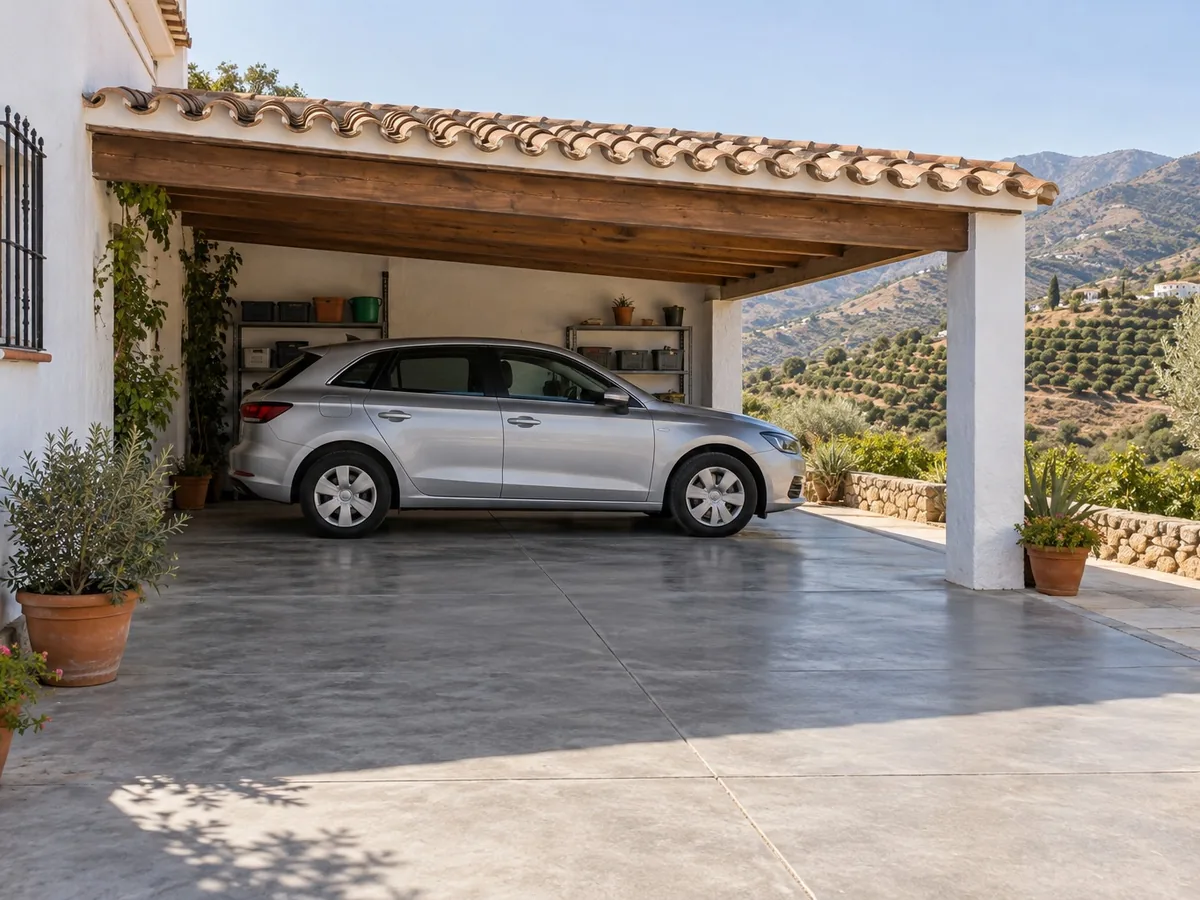
Garages, warehouses and storerooms
This is where it belongs. It takes wheels, forklifts and knocks, it doesn’t lift like tiles and it sweeps clean in no time. In a 300 m² warehouse you save hundreds of tile joints that would end up broken.
Homes and shops
Indoors it looks great, especially in renovated country houses and shops with an industrial feel. Two things to bear in mind: it’s cold to the touch and hard if you fall. With underfloor heating it works brilliantly.

Outdoors: with caveats
A high-gloss polish outdoors is slippery when wet. For terraces, ramps and driveways we do a textured float or broom finish, which keeps the seamless concrete look and gives good grip. If you’re after a decorative outdoor surface, stamped concrete is almost always the better choice.
Polished or stamped concrete: which one do you need?
It’s the question we’re asked most, and the answer depends mainly on where the floor is going.
| Polished concrete | Stamped concrete | |
|---|---|---|
| Best for | Indoors, garages, warehouses, shops | Outdoors: driveways, patios, terraces, pool surrounds |
| Look | Smooth, seamless, grey or tinted | Imitates stone, wood or pavers, in colour |
| Grip when wet | Low if high-gloss | Good, thanks to the pattern texture |
| Maintenance | Normal mopping; re-polish after some years | Reseal every 2–3 years |
In short: indoors, polished; outdoors, stamped. And for a garage open to the street, power-floated with quartz, which is the middle ground.
Polished concrete price per m²
The price of polished concrete depends mainly on whether a slab has to be laid or already exists, the finish you want and the area. These are the most common options:
- Diamond polishing on an existing slab: the simplest option if the slab is sound.
- New slab + power-floated quartz finish: very tough, ideal for garages and warehouses.
- New slab + diamond polishing: the finest finish for interiors.
- Lithium silicate densifying and sealing: added to harden and protect the surface.
Below 50 m² the price per metre goes up, because the machine, the lorry and the crew cost the same for 30 m² as for 100. And if the old slab has cracks or uneven areas, it has to be repaired before polishing. Every job is quoted after a site visit.
Maintenance: less than you'd think
A well-densified polished floor doesn’t need waxes or special treatments. Sweep it, mop it with water and a neutral soap, and that’s it. What does damage it is acids and strong bleach, which kill the shine.
Over the years, in high-traffic areas, the shine fades. It comes back with a light re-polish, without lifting anything. In a garage or warehouse you normally won’t need to touch it for ten years.
Typical projects
These are illustrative examples of how we approach this kind of job. They are not specific clients; when we have real cases with the owners’ permission, they will go here.
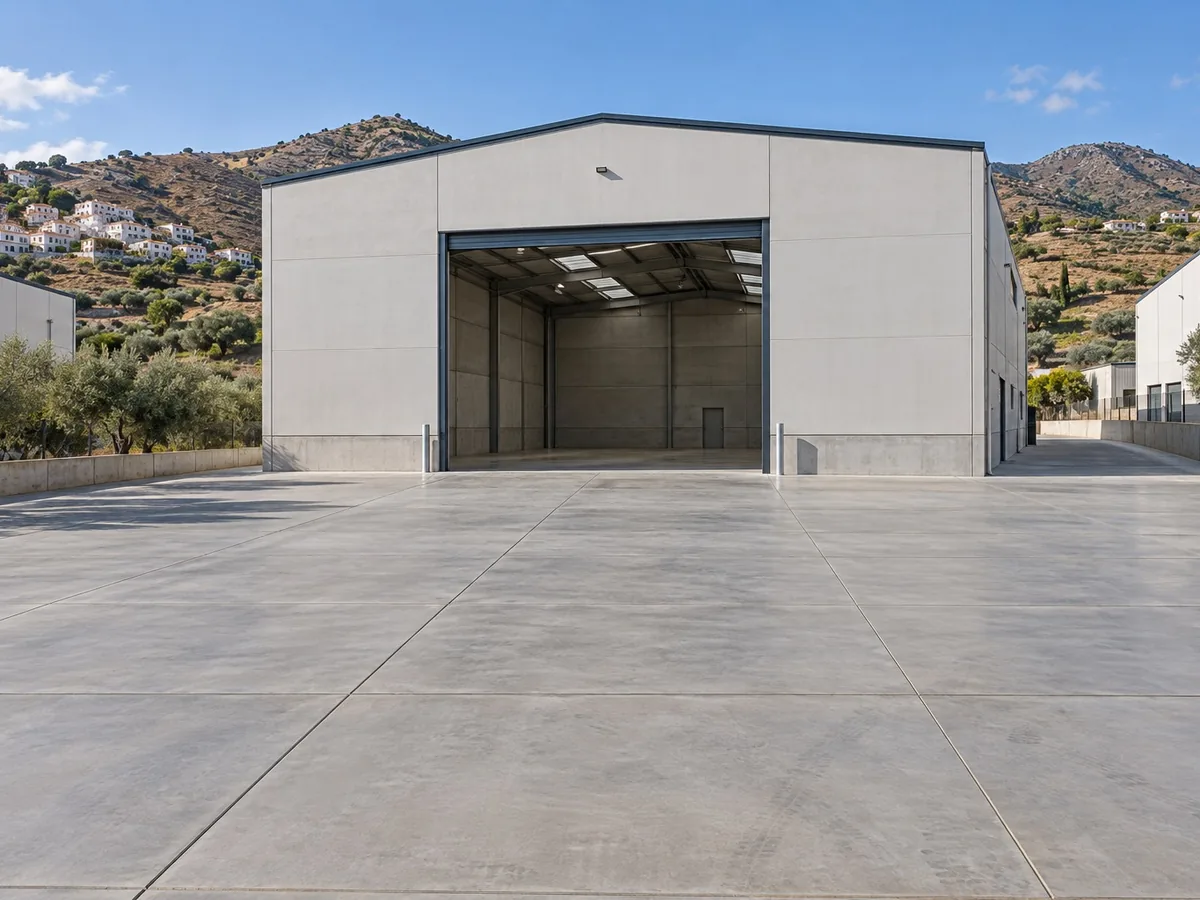
A 250 m² storage warehouse on an industrial estate in Vélez-Málaga
New 15 cm slab with mesh and fibres on compacted hardcore, power-floated with grey quartz and joints cut at 24 hours in 4.5 × 4.5 m bays. Three days’ work and one week before the forklift could go in.
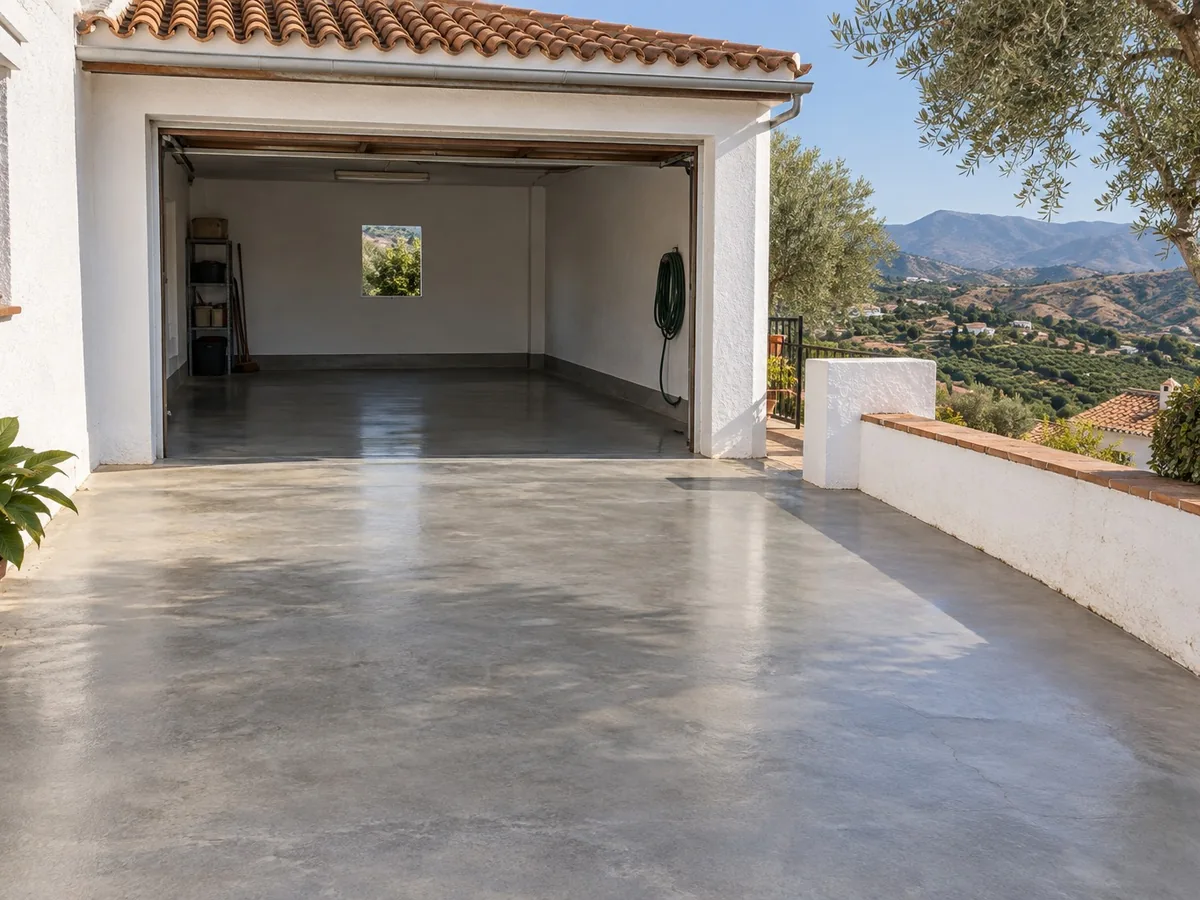
A 40 m² home garage in the Axarquía
Old slab with oil stains and a few cracks. Cracks repaired with resin, then grinding, diamond polishing to a medium grit and densifying. The result is a smooth, dust-free floor that’s easy to clean. Two days’ work.
Have a garage, warehouse or shop floor to do?
Tell us the area, whether the slab exists or needs laying and what it will be used for. We’ll tell you which finish suits you and give you a fixed price after the visit.
Polished concrete FAQs
The questions we’re asked most before people choose a polished concrete floor.
What is polished concrete?
Polished concrete is a seamless concrete floor with a smooth, closed finish, achieved by power-floating it fresh with a quartz hardener or grinding it with diamond discs once the slab has cured. It is very hard-wearing and has no tile joints. It’s mainly used in garages, warehouses, shops and industrial-style homes.
How much does polished concrete cost per square metre?
It depends on whether a new slab is laid or an existing one is polished, the finish (power-floated quartz or diamond polishing), densifying and sealing, and the area: below 50 m² the price per metre goes up. We look at the job and give you a fixed quote.
What is the difference between stamped and polished concrete?
Stamped concrete is coloured and pressed with a mould that imitates stone, wood or pavers, and it’s designed for outdoor use. Polished concrete is smooth and seamless, designed for interiors, garages and warehouses. The rule of thumb is simple: indoors, polished; outdoors, stamped, because high-gloss polished concrete is slippery when wet.
Can polished concrete be used outdoors?
High-gloss polished concrete isn’t a good idea outdoors because it’s slippery when wet. For terraces, ramps and driveways we use a textured float or broom finish, which keeps the seamless concrete look with good grip. For a decorative outdoor surface, stamped concrete is usually the better option.
Can an existing concrete slab be polished?
Yes, an existing concrete slab can be diamond-polished as long as it’s sound. First, cracks and chips are repaired with resin and the surface is ground level. If the slab has large cracks, uneven areas or moves, it’s better to relay it, because polishing doesn’t fix defects in the base.
Is polished concrete slippery?
Dry polished concrete is no more slippery than polished porcelain tile, but when wet it can be slippery if it has a high-gloss finish. In garages and areas where water gets in we leave a satin or power-floated finish, which grips better. In homes, with a dry floor, it rarely causes problems.
How soon can a polished concrete floor be used?
A polished concrete floor can be walked on after 48–72 hours and driven on after 7 days. The concrete reaches full strength at 28 days. For a diamond-polished finish, the work is done once the slab has cured, usually after 3 or 4 weeks.
What maintenance does polished concrete need?
Polished concrete only needs sweeping and mopping with water and a neutral soap. Avoid acids and strong bleach, which dull the shine. Over the years, in high-traffic areas, the shine is restored with a light re-polish without lifting the floor. In garages and warehouses you normally won’t need to touch it for a decade.