STAMPED CONCRETE
Stamped concrete in Málaga city
We lay stamped concrete in Málaga city for driveways, patios, terraces and pool surrounds, mainly at detached houses and homes with a plot. Guide price €30–45 per m² for average-sized jobs, including base, mesh, colour, mould and resin, and two to four days’ work.
We’re from the Axarquía and come into Málaga every week. Here’s what changes when we work in the city compared with a cortijo in the hills – which is more than you might think.
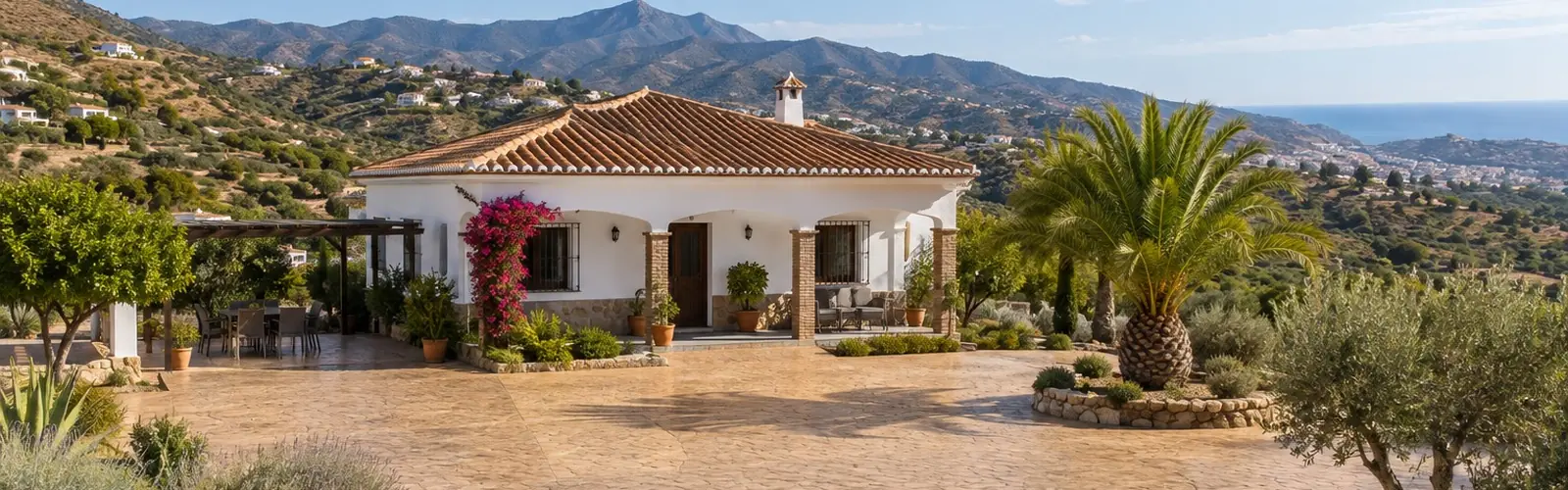
What changes when you lay stamped concrete in the city
The concrete is the same in Churriana as it is in Periana. What changes is everything around the job – and that’s what usually pushes a quote up if it isn’t planned from the start.
Access for the lorry
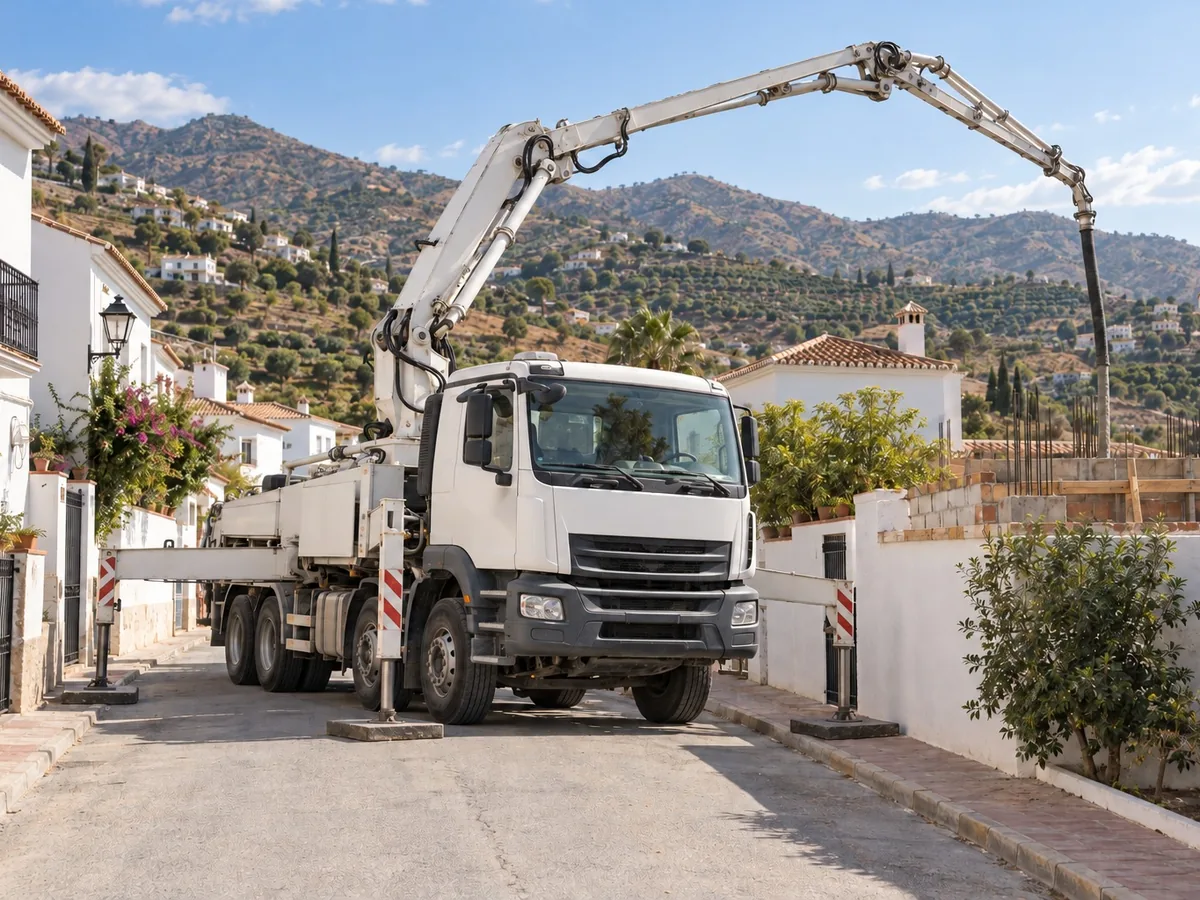
On many city streets the concrete mixer can’t get right up to the plot, or can’t stay parked for as long as needed. Then the concrete has to be pumped or brought in by dumper. We check this at the site visit and include it in the quote from day one – not on the day of the job.
Neighbours and working hours
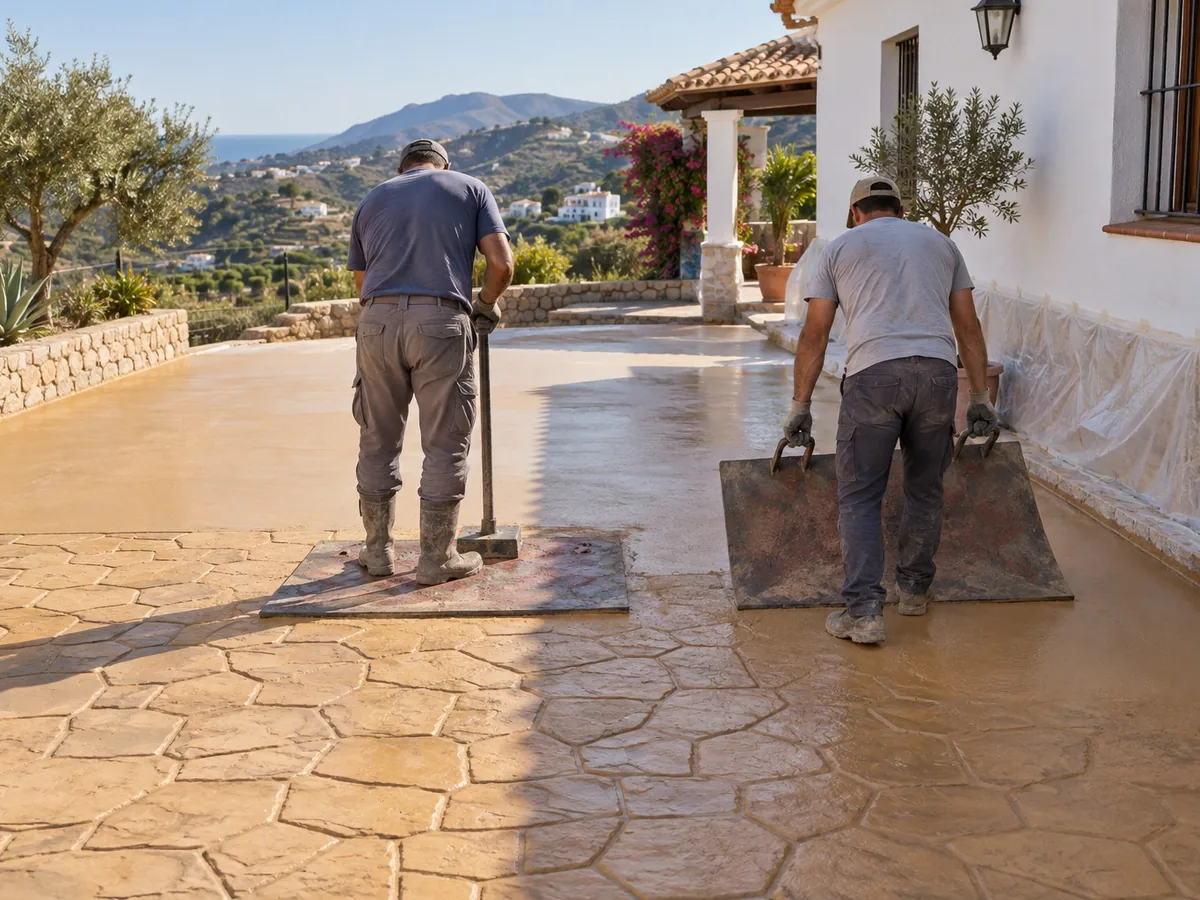
Stamped concrete has to be worked quickly: once it’s poured, there are only a few hours to colour and stamp it. We start early, within the hours allowed by the local bylaws, and we protect nearby façades, walls and cars from the colour dust.
Sun and salt air
In areas close to the sea, such as El Palo, Pedregalejo or the west of the city, the salty humidity and sun are hard on the resin. That’s why we recommend light colours and resealing every 2 years instead of every 3.
Where we work in Málaga
We work all over the city, but stamped concrete suits areas of detached houses with plots best: Churriana, Campanillas, Puerto de la Torre, Cerrado de Calderón, El Limonar, Pinares de San Antón, Santa Rosalía-Maqueda and the outlying rural areas.
We also do communal areas for residents’ associations (comunidades de propietarios): garage entrances, paths around the pool and ramps.
Most common jobs in Málaga city
Driveways and garages
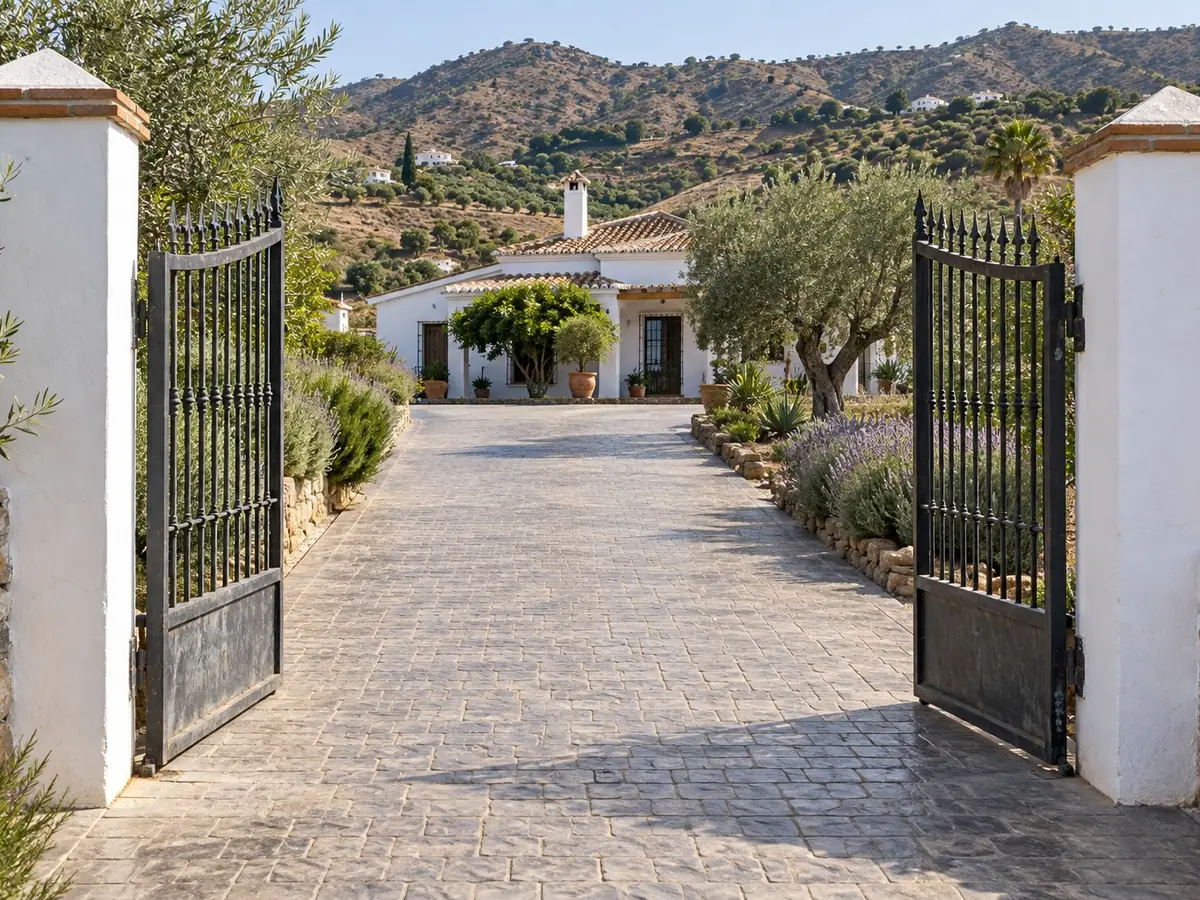
12 to 15 cm of mesh-reinforced concrete, because it has to carry weight and turning wheels. A stone or cobble pattern, which hides tyre marks well. More on our stamped concrete page.
Patios and terraces
We do a lot of patio renovations over old tiles. Often the tiles can be lifted and the existing slab reused, which makes the job quite a bit cheaper.
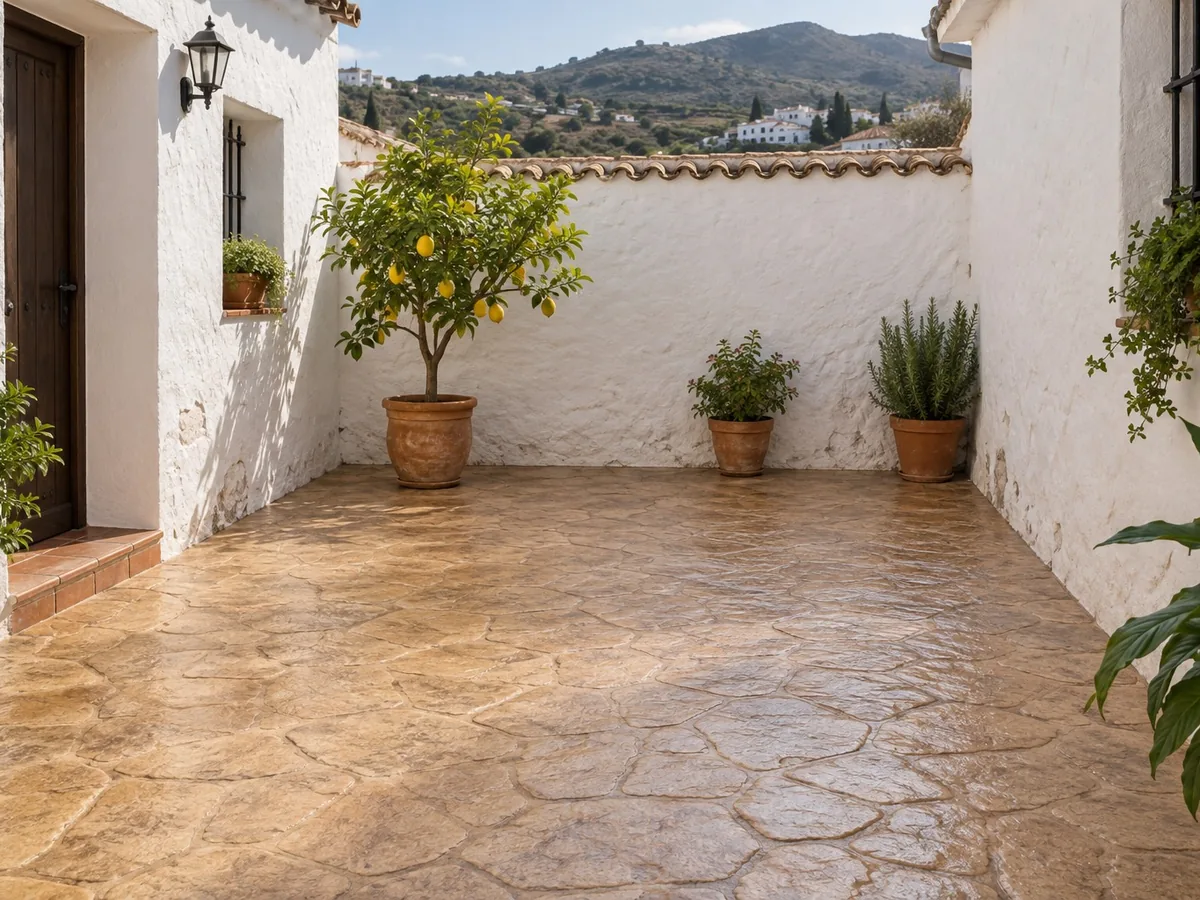
Around the pool
A non-slip finish and light colours so it doesn’t burn bare feet in August. If you’re planning a new pool, see our swimming pool construction page.
Permits: what you need in Málaga
Paving within your plot is usually processed as minor works with Málaga’s Gerencia Municipal de Urbanismo (the city planning office), normally through a declaración responsable. If the work affects the pavement, a dropped kerb or communal areas, the procedure changes.
Every case is a little different, so at the site visit we tell you exactly which paperwork you need. We never start a job until that’s clear.
Stamped concrete prices in Málaga
In Málaga city the price is the same as in the rest of the area, €30–45 per m² for jobs of 50 to 150 m², with one exception: if a pump is needed to reach the plot, its cost is added and spread across the square metres of the job.
For more details on what’s included, see our stamped concrete page.
Guide prices as of September 2026, excluding VAT.
Typical project
An illustrative example of how we approach this kind of job in the city. It does not relate to a specific client.
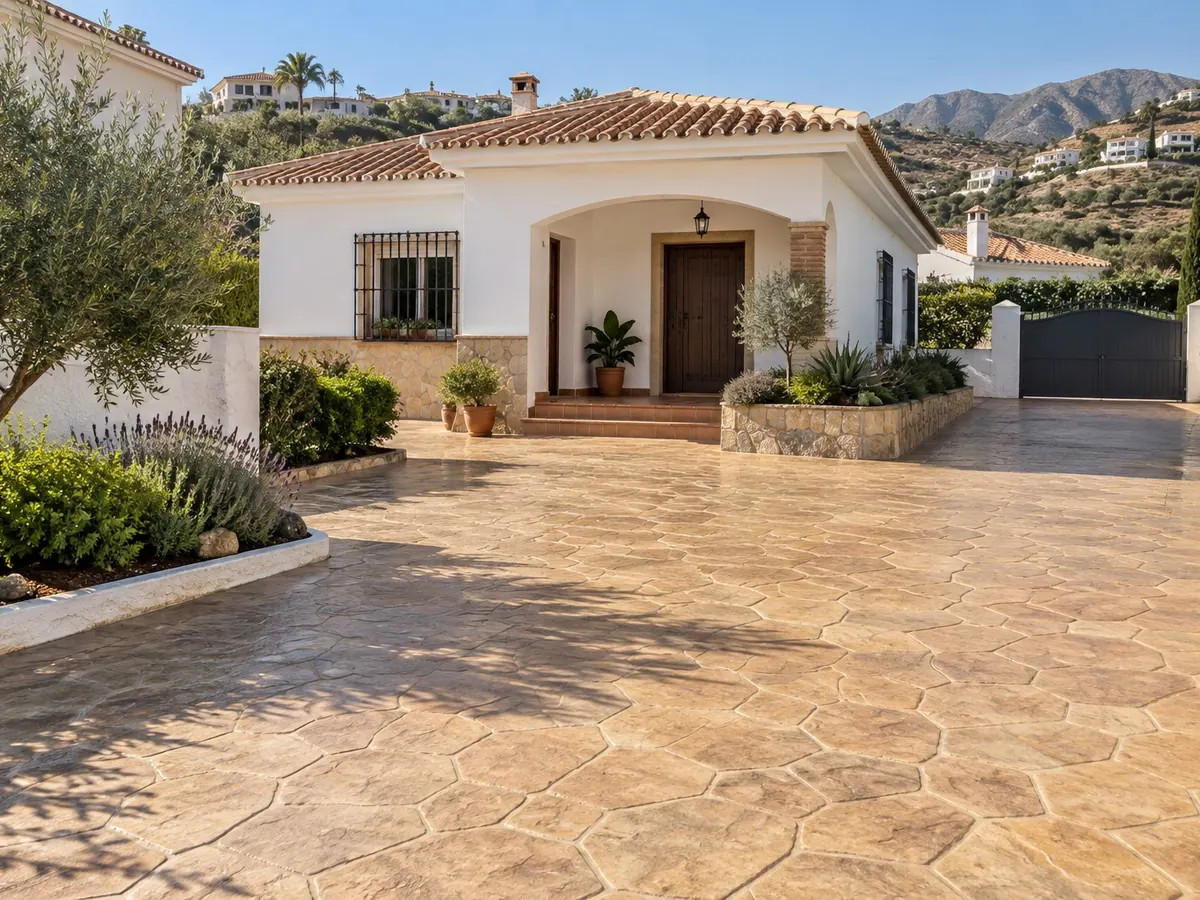
Driveway and patio at a house in Churriana, 85 m²
A narrow street with no room for the concrete mixer: pumped from the corner. 15 cm aggregate sub-base, 15 cm of concrete on the driveway and 10 cm on the patio, irregular stone pattern in sand colour. Joints cut the next day and two coats of resin. Three days on site and one week before the car can go on it.
Live in Málaga and want to renovate your outdoor space?
Send us a photo, the approximate square metres and the street. We’ll come and take a look with no obligation, and tell you if a pump is needed before giving you a price. We speak English.
Stamped concrete in Málaga: frequently asked questions
The questions city residents ask us most.
How much does stamped concrete cost in Málaga city?
Stamped concrete in Málaga city costs between €30 and €45 per m² for jobs of 50 to 150 m², plus VAT – the same as in the rest of the province. What can make it more expensive in the city is needing to pump the concrete because the mixer can’t reach the plot; that cost is spread across the square metres of the job.
Do I need a licence to lay stamped concrete in Málaga?
To lay stamped concrete within a plot in Málaga, a minor works application to the Gerencia Municipal de Urbanismo is usually enough, normally through a declaración responsable. If the work affects the pavement, a dropped kerb or communal areas, the procedure changes. At the site visit we tell you what you need in your particular case.
Do you work in Churriana, Campanillas or Puerto de la Torre?
Yes, we work throughout Málaga city, especially in areas of detached houses with plots such as Churriana, Campanillas, Puerto de la Torre, Cerrado de Calderón, El Limonar and Pinares de San Antón. We also do communal areas for residents’ associations.
How long does a stamped concrete job take in Málaga?
A stamped concrete job of 50 to 150 m² in Málaga takes 2 to 4 working days. You can walk on it 2–3 days after pouring and drive on it after 7. If an old floor needs lifting or the base needs preparing, add one or two days at the start.
How does being near the sea affect stamped concrete?
In seaside neighbourhoods such as El Palo or Pedregalejo, the salty humidity and sun wear down the resin on stamped concrete faster. It doesn’t damage the concrete, but it fades the colour. That’s why on the coast we recommend light colours and resealing every 2 years instead of every 3.